



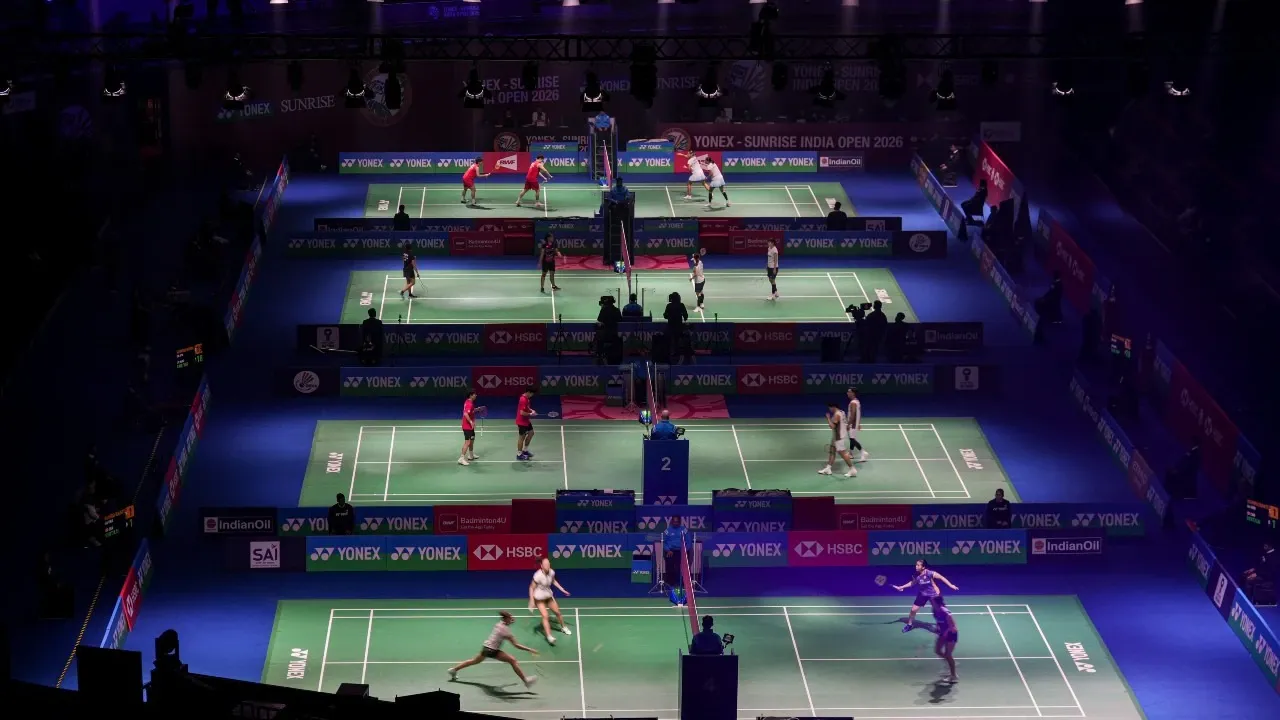
Delhi’s January air is no secret to locals, but the 2026 India Open laid bare systemic flaws in India’s approach to hosting international sport. The tournament became less about badminton and more a reflection of recurring failures in planning, athlete welfare, and event management.
After his match, Singapore’s Loh Kean Yew openly criticised the hazardous air quality, saying he had to wear a mask indoors and limit outdoor activity, highlighting that even elite conditioning cannot compensate for polluted conditions. Earlier, Denmark’s Anders Antonsen withdrew citing “extreme pollution,” while another Danish player, Mia Blichfeldt, flagged hygiene and venue standards. Issues extended beyond air: monkey sightings, bird droppings on court, and inadequate hygiene underscored broader organizational lapses.
BAI’s defensive response acknowledged concerns but downplayed their severity, while Indian players largely avoided criticism. The BWF noted improvements but confirmed problems with cleanliness and crowd management. These incidents reflect a deeper hosting issue: India repeatedly struggles with the operational and administrative groundwork essential for world-class events.
Past examples reinforce the pattern. Delays at the National Boxing Championships, chaotic logistics during IPL celebrations, and security lapses during the Women’s Cricket World Cup exposed systemic gaps in planning, safety, and spectator experience. Even high-profile events like Lionel Messi’s 2025 Kolkata appearance highlighted poor crowd management and unmet expectations.
Behind the scenes, bureaucratic inefficiency compounds issues. Siddharth Singh’s account of hosting a Jiu Jitsu event at KD Jadhav Stadium in Delhi illustrates bureaucratic hurdles, arbitrary charges, inadequate staffing, and poor infrastructure management, proving that India’s venues can be world-class in design but fail in execution.
Spectator experience also suffers: poor access, dirty facilities, and overpriced amenities turn fans from participants into frustrated bystanders. As Gunalan Paneer notes, Melbourne’s venues prioritise fans systematically, while India treats them as an afterthought — a reflection of structural neglect rather than cultural failure.
The core issue is institutional readiness. Hosting global multi-sport events requires reliable systems: honoured contracts, maintained facilities, enforced security, environmental responsiveness, and constructive engagement with criticism. The India Open demonstrated that current practices often prioritise image over substance, putting athlete safety and fan experience at risk.
Experts stress the need for structural reforms. Gaurav U Gullaiya highlights that athletes should focus solely on performance, while venues must be affordable, safe, and well-maintained. Public-private partnerships need genuine accountability, with sustainable incentives for long-term success.
India can host the Olympics, but ambition alone is insufficient. The India Open showed that readiness is not about stadiums or slogans — it is about systems, transparency, and problem-solving. Until administrators address predictable issues openly and effectively, the nation risks compromising both athletes’ welfare and its global sporting reputation.
As Loh Kean Yew remarked, “I’m surprised you guys are okay.” It was more than a comment on Delhi’s air; it was a reflection of a sporting culture that silences criticism instead of fixing problems. For India to truly host the 2036 Olympics successfully, it must learn to confront failures, implement systemic solutions, and ensure that pride does not replace preparedness.