





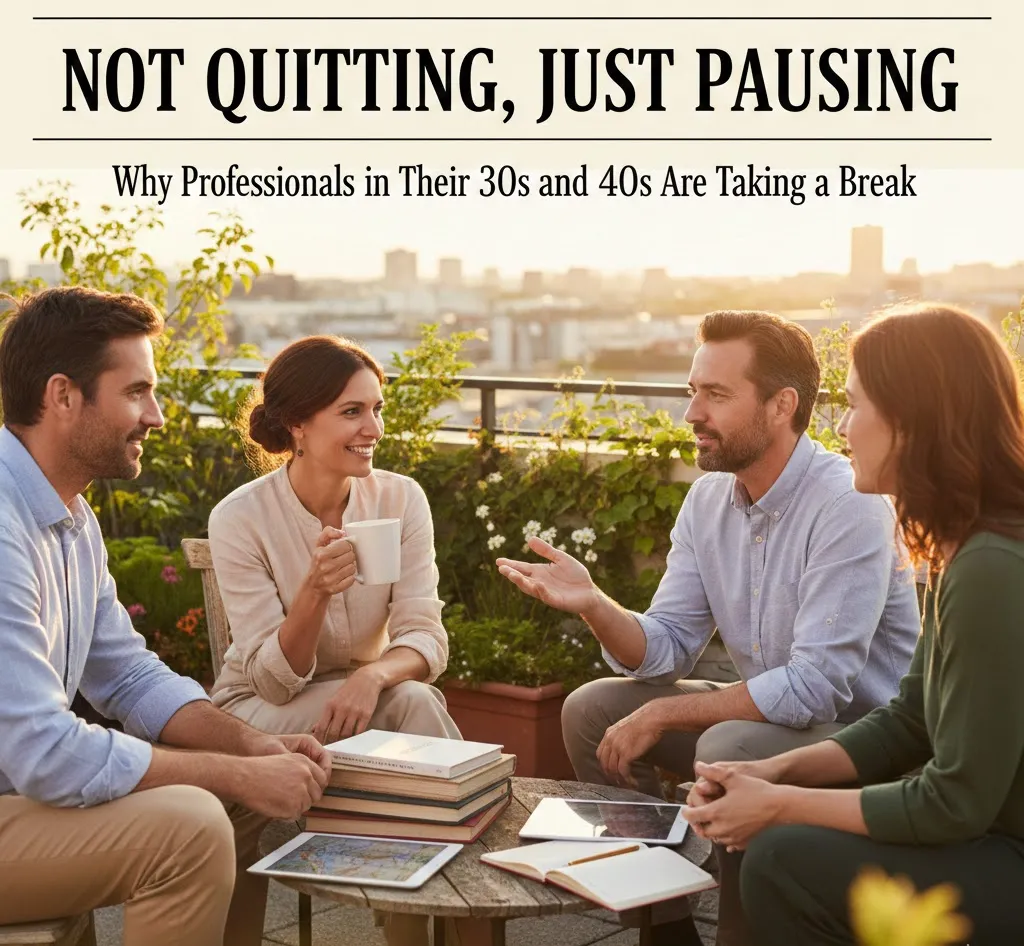
For decades, the idea of a “gap year” belonged to teenagers postponing college. In 2026, however, the pause button is being pressed by a very different demographic — mid-career professionals with mortgages, children, ageing parents, and more than a decade of corporate experience.
The adult gap year has arrived — and it is far more strategic than spontaneous.
Post-pandemic workplace shifts, constant digital connectivity, layoffs, and rapid AI-led transformation have prompted professionals to rethink the “always-on” model of success.
According to data shared by LinkedIn, nearly 62% of professionals have taken a career break at some point. The platform even introduced a dedicated “career break” feature, signalling how normalised the concept has become.
HR leaders observe that stigma around career gaps is easing. Today, a clearly articulated break for caregiving, mental health recovery, or upskilling often signals self-awareness and maturity rather than instability.
Across professional forums and social platforms, the concept of “micro-retirement” is gaining traction — taking planned breaks throughout a career instead of waiting for traditional retirement at 60.
This aligns with insights from the World Economic Forum, whose Future of Jobs reports highlight continuous reskilling as essential in a rapidly evolving economy. In that context, a mid-career pause can be strategic preparation rather than indulgence.
Professionals in their late 30s and 40s are stepping away to pursue higher education, explore climate tech, spend time with family, or simply reassess their long-term direction.
The motivations are layered and practical:
Upskilling and Career Pivots:AI and automation are reshaping industries, prompting many to pursue certifications or advanced degrees.
Caregiving Responsibilities:India’s sandwich generation often finds standard leave policies insufficient.
Mental Health Recovery:Extended stress and uncertainty have made structured rest essential.
Entrepreneurial Exploration:Some use the time to test startup ideas without long-term regret.
Unlike academic sabbaticals, most adult gap years are self-funded. Financial planners recommend saving 9–12 months of expenses, along with emergency reserves. EMIs, tuition fees, and healthcare costs make this a calculated decision.
This raises questions about privilege, as such breaks are currently more accessible to urban upper-middle-class professionals. Yet culturally, the shift signals a redefining of ambition itself.
Recruiters acknowledge that unexplained gaps can still pose challenges. However, breaks tied to skill development or caregiving are increasingly accepted. Structured “returnship” programmes are emerging to support mid-career re-entry.
The broader narrative is shifting: career paths are becoming non-linear. Growth is no longer defined by uninterrupted upward movement but by intentional recalibration.
The adult gap year reflects a generation shaped by economic crises, a pandemic, and technological disruption. Stability feels less certain. Purpose feels more urgent.
For many professionals, pressing pause is not career suicide. It may well be career strategy — a deliberate step back to move forward with clarity and resilience.

ପଞ୍ଜାବୀ ଗାୟକ ଓ ଅଭିନେତା ଦିଲଜିତ ଦୋସାଞ୍ଜଙ୍କ ଦିଲ୍ଲୀ କନ...

ପୂର୍ବତନ ଭାରତୀୟ ଲେଗ୍‌ ସ୍ପିନର ଅମିତ ମିଶ୍ର ନିଜ ଅନ...
ବଙ୍ଗୋପସାଗରରେ ବଢ଼ୁଛି ପ୍ରଣାଳୀର ଶକ୍ତି ପୂର୍ବ-କେନ୍ଦ୍...

ହଟିଲା Dhumavathiଙ୍କ ଚର୍ଚ୍ଚିତ ଡ୍ୟାନ୍ସ ସିନ୍ Netfl...

WPL 2027 ଅକ୍ସନ୍କୁ ନେଇ ଏବେଠାରୁ ଚର୍ଚ୍ଚା ଜୋର୍ ଧରିଛି।...

ଭାରତ ଓ ନ୍ୟୁଜିଲାଣ୍ଡ ମଧ୍ୟରେ ପାଞ୍ଚ ମ୍ୟାଚ୍ ବିଶିଷ୍ଟ T20...

ଅକ୍ଟୋବର ୧୮ ତାରିଖରେ ମୁମ୍ବାଇର ଜୁହୁ ଅଞ୍ଚଳରେ ଟାଇଗର ଶ୍ର...
ଉତ୍ତର ଆନ୍ଧ୍ର–ଦକ୍ଷିଣ ଓଡ଼ିଶା ଉପକୂଳ ଆଡ଼କୁ ଗତି...