





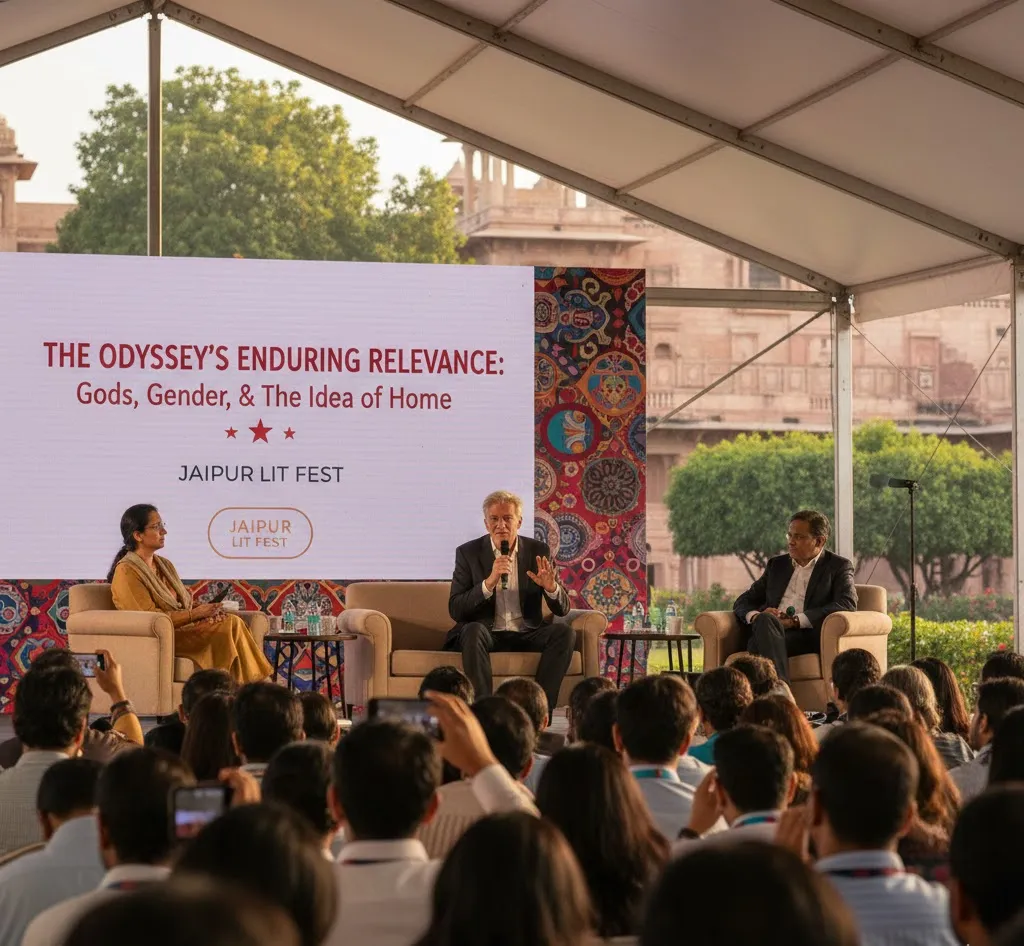
Why The Odyssey Still Matters: Stephen Fry on Gods, Gender, and the Idea of Home
On Day 2 of the2026 Jaipur Literature Festival, a panel at the Vedanta Front Lawn explored whyThe Odyssey, nearly 3,000 years old, continues to resonate with modern readers. Stephen Fry, actor and storyteller, led the discussion alongsideSimon Goldhill, a Greek classics expert, andJosephine Quinn, an Oxford historian of classical literature.
For Indian readers familiar with epics like theMahabharataandRamayana, the themes feel familiar. Like Rama’s journey to Ayodhya or the Pandavas’ exile, Odysseus’ story is not about conquest butendurance, exile, and the cost of returning home. His twenty-year absence—ten years at the Trojan War and ten years trying to return—reflects a journey of human complexity, frailty, and resilience.
Fry highlighted that Greek gods arefractured reflections of human nature. Dionysus embodies instinct and indulgence, Apollo represents reason, and Zeus symbolizes authority. The gods quarrel, err, and fear human creativity—echoing modern anxieties aroundpower and technology, including artificial intelligence.
Josephine Quinn and Simon Goldhill exploredgender and moralityin The Odyssey. Penelope emerges as themoral and intellectual centre, cleverly managing Ithaca for 20 years and outwitting Odysseus, the “key trickster” of Western literature. The panel emphasised that the epic should not be dismissed as patriarchal; instead, it portrayscomplex human relationships, moral ambiguity, and the subtleties of power.
Goldhill noted that Homer’s identity remains uncertain—it may not even have been a single person. Yet the epic’s sophistication endures. Itstight structure, oral storytelling heritage, and participatory naturemake it a work that transcends time, much like India’s epic traditions.
At its heart, The Odyssey is a story abouthome and belonging. Fry traced “nostalgia” tonostos, the Greek word for the pain of returning home, and linked it to Hestia, goddess of the hearth. Odysseus’ longing—for his wife, his hearth, and the simple comfort of home—makes him deeply relatable. By the end, he is not a mythic hero among gods but a human figure,exhausted, longing, and profoundly recognizable.
The discussion demonstrated that, even in a modern world,The Odyssey continues to teach lessons about endurance, human complexity, gender, and the meaning of home—making it as relevant today as it was millennia ago.
ନୂଆଦିଲ୍ଲୀ:ସାଉଦି ଆରବରେ ଦୁଇ ବାଂଲାଦେଶୀ ନାଗରିକନଜରୁଲ ଇସ...

୨୩ ଅକ୍ଟୋବରରେ ଲଘୁଚାପ ସୃଷ୍ଟି ସମ୍ଭାବନା ଭାରତୀୟ ପାଣି...
ନୂଆଦିଲ୍ଲୀ: ହର୍ମୁଜ୍‌ ପ୍ରଣାଳୀରେ ୨୧ ଜଣ ଭାରତୀୟ ନା...

ଥାଇଲାଣ୍ଡ-ମିଆଁମାର ଅଞ୍ଚଳରେ ଘୂର୍ଣ୍ଣିବଳୟ IMDର ସଦ୍ୟତ...

ଉତ୍ତର ଆଣ୍ଡାମାନ ସାଗରରେ ଘୂର୍ଣ୍ଣିବଳୟ IMDର ତାଜା ସୂଚ...

କଂଗ୍ରେସ ସାଂସଦ ଶଶୀ ଥରୁର ବୁଧବାର ତିରୁବନନ୍ତପୁରମରେ ସାମ୍...

Gen Z ଆନ୍ଦୋଳନକୁ ନେଇ ବିଜେପି ଭୟଭୀତ’ ଦେବୀ ପ୍...

ଅକ୍ଟୋବର ୨୧, ବୁଧବାର ଦେଶର ରାଜନୀତି, ନ୍ୟାୟ ବ୍ୟବସ୍ଥା ଓ...