





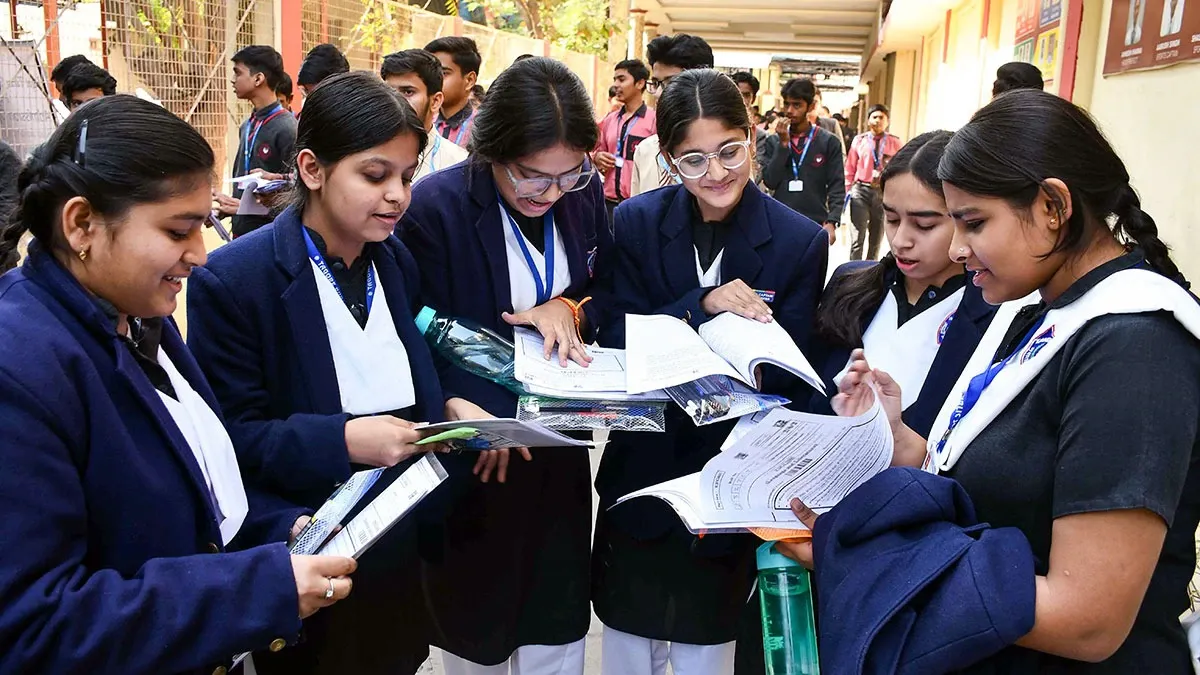
The Central Board of Secondary Education (CBSE) Class 10 Mathematics Standard board exam conducted on February 17, 2026, has drawn mixed yet largely balanced feedback from teachers and students across the country.
Most educators agreed that the paper closely followed NCERT textbooks and the official sample paper pattern. However, whether students found it easy or difficult largely depended on their time management and calculation speed.
Teachers from multiple schools observed that nearly 70% of the questions were directly based on NCERT exercises and previously practised formats. Direct questions included:
Proof of the Basic Proportionality Theorem (BPT)
Properties of cyclic quadrilaterals
Tangents and radii
Median and mode of grouped data
Application-based trigonometry
Many educators described the paper as moderate in difficulty and comparatively easier than last year. Students who had revised NCERT thoroughly and practised previous year questions (PYQs) found the structure familiar and manageable.
The 80-mark paper followed a structured format:
Section A: 18 MCQs + 2 Assertion-Reason (1 mark each)
Section B: 6 Very Short Answer (2 marks each)
Section C: 6 Short Answer (3 marks each)
Section D: 4 Long Answer (5 marks each)
Section E: 3 Case/Source-Based Questions (4 marks each)
While MCQs from topics like HCF, LCM, Arithmetic Progressions (AP), and Probability were mostly easy, assertion-reason questions were slightly tricky. Some teachers noted that MCQs were time-consuming, especially for average students.
Sections B and C were generally considered straightforward, with several direct NCERT-based questions. Sections C and D included familiar themes from circles, triangles, irrational numbers, linear equations, probability, and statistics (mean, median, mode).
Long-answer questions in Section D required structured steps and conceptual clarity. Some teachers reported that the final two questions were relatively challenging. In particular, one circles question in Set 1 was described as difficult.
Several educators pointed out that the paper felt lengthy, making time management a crucial factor. While many students completed the paper within three hours, others struggled due to extensive calculations and detailed working.
Interestingly, some schools observed that this year’s Mathematics Basic paper appeared trickier than the Standard paper. In certain cases, Basic required more interpretation and careful reading, while Standard focused more on direct formula application.
For example, a probability question in the Standard paper was formula-based, whereas a similar topic in Basic required data interpretation. Some geometry questions in Basic reportedly involved multi-step reasoning compared to simpler versions in Standard.
Overall, the Mathematics Standard paper rewarded students who had:
Revised NCERT thoroughly
Practised previous years’ questions
Managed time effectively during the exam
While the majority found the paper balanced and fair, the length and calculation intensity made smart planning essential.

SMA ଔଷଧକୁ ନେଇ କେରଳରେ ଚର୍ଚ୍ଚା ଓ ବିବାଦ ମଧ୍ୟରେ ସ୍ୱାସ୍...

ମ୍ୟାଲେରିଆ ପ୍ରତିରୋଧ କ୍ଷେତ୍ରରେ ଏକ ବଡ଼ ଅପଡେଟ୍ ଆସିଛି।...
ମୁମ୍ବାଇରେ ଆତଙ୍କବାଦ ବିରୋଧୀ ଅଭିଯାନ ସମୟରେ ମହାରାଷ୍ଟ୍ର...
ହରିୟାଣାର ମୋଷ୍ଟ ୱାଣ୍ଟେଡ୍ ଗ୍ୟାଙ୍ଗଷ୍ଟର ହିମାଂଶୁ ଭାଉ ଆମ...
ବର୍ଷା ପରେ ଭୁଶୁଡ଼ିଲା ରିଟେନିଂ ୱାଲ୍ ପ୍ରାଥମିକ ସୂଚନା...

ଡର୍ମାଟୋଲୋଜିଷ୍ଟ ଡା. ଜୁଶ୍ୟା ଭାଟିଆ ସରିନ୍ ଭାରତୀୟ ତ୍ୱଚା...

ପଶ୍ଚିମ ଓଡ଼ିଶାର ପ୍ରମୁଖ ଚିକିତ୍ସା ପ୍ରତିଷ୍ଠାନ ବୁର୍ଲା ଭ...
ଭାରତର ସବୁଠୁ ବଡ଼ ପରମାଣୁ ବିଦ୍ୟୁତ କେନ୍ଦ୍ର କୁଡନକୁଲମରେ...