










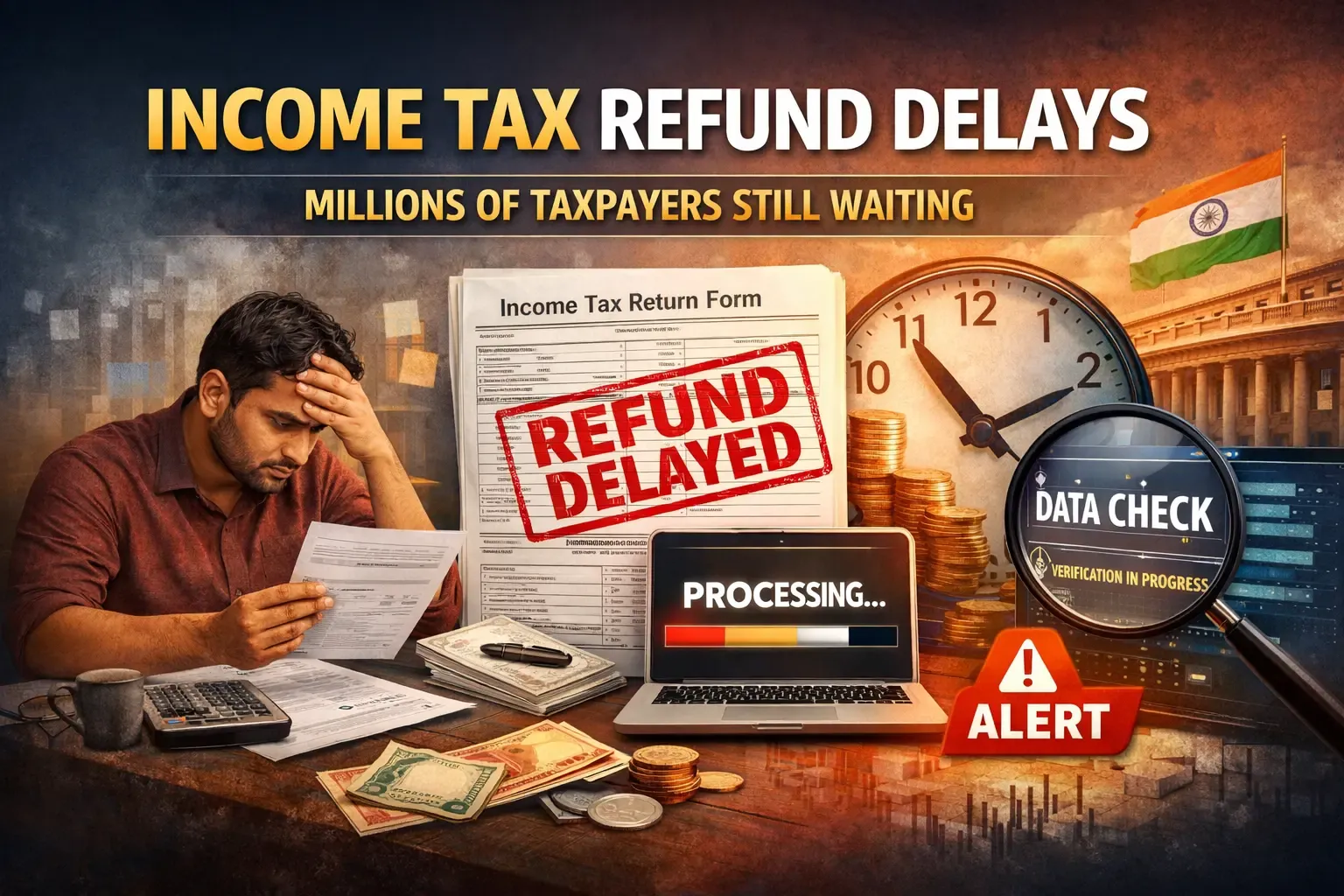
Income tax refund delays have become a major issue this assessment year, affecting salaried employees, pensioners, and small taxpayers across India. Normally, refunds are credited within a few weeks after filing and e-verification. However, this year many people are still waiting months later.
The Income Tax Department has introduced stricter verification systems. Returns are now being checked more deeply against Form 26AS, the Annual Information Statement (AIS), bank interest data, and other financial records. Even small mismatches — such as interest income or TDS differences — are causing returns to be flagged for extra scrutiny.
Additionally, automated “nudges” are being sent to taxpayers asking them to re-check or revise their filings. While these measures are meant to prevent wrong refunds and tax evasion, they have slowed down the overall refund process.
Tax experts say that while the law allows the department time to complete processing, there is no clear timeline for refund release. This uncertainty has created stress, especially for people who depend on refunds for household expenses, investments, or medical needs.
In some cases, taxpayers may be eligible for interest on delayed refunds, but the main concern remains when the money will actually be credited. The situation has reopened debate about the efficiency and transparency of India’s tax refund system.
ନ୍ୟାସନାଲ୍ ଆୱାର୍ଡ ବିଜେତା ଫିଲ୍ମ ନିର୍ଦ୍ଦେଶକ ତଥା **Fil...
ଅଭିନେତାରୁ ରାଜନେତା ଏବଂ ପରେ ତାମିଲନାଡୁର ମୁଖ୍ୟମନ୍ତ୍ରୀ...

SEMICON India 2026ରେ ଓଡ଼ିଶାର ଦବଦବା, NIT Rourkelaର...

କଟକ ଜିଲ୍ଲା ଖୁଣ୍ଟୁଣୀ ଡାଳୁଆ ସଂରକ୍ଷିତ ଜଙ୍ଗଲରେ ବେଆଇନ ଦ...
ଭାରତୀୟ ଟି-୨୦ ଦଳରେ ସ୍ଥାନ ପାଇବା ପାଇଁ ବୈଭବ ସୂର୍ଯ୍ୟବଂଶ...
ଭାରତୀୟ କ୍ରିକେଟ୍ ଦଳର ହ୍ୱାଇଟ୍-ବଲ୍ ସେଟ୍ଅପ୍କୁ ହାର୍ଦ୍ଦି...

ସମ୍ବଲପୁର ସହରରେ ରାସ୍ତାକଡ଼ରେ ଥିବା ଅନଧିକୃତ ଦୋକାନ ଓ ଷ୍...

ଓଡ଼ିଶାର ପ୍ରମୁଖ ମହିଳାକେନ୍ଦ୍ରିକ କଲ୍ୟାଣ ଯୋଜନାSubhadra...
‘Hanuman Ansh’ବକ୍ସ ଅଫିସ୍ରେ ଲଗାତାର ଚମକ...
‘କଚ୍ଚା ବାଦାମ’ ରିଲ୍‌ ଜରିଆରେ ଲୋକପ୍ର...
ଭାରତ-ଆଫଗାନିସ୍ତାନ ‘ଫ୍ରେଣ୍ଡସିପ୍ କପ୍’ ସିର...
‘From -17 to Europe’—ଆନୋଏଟା ଷ୍ଟା...