





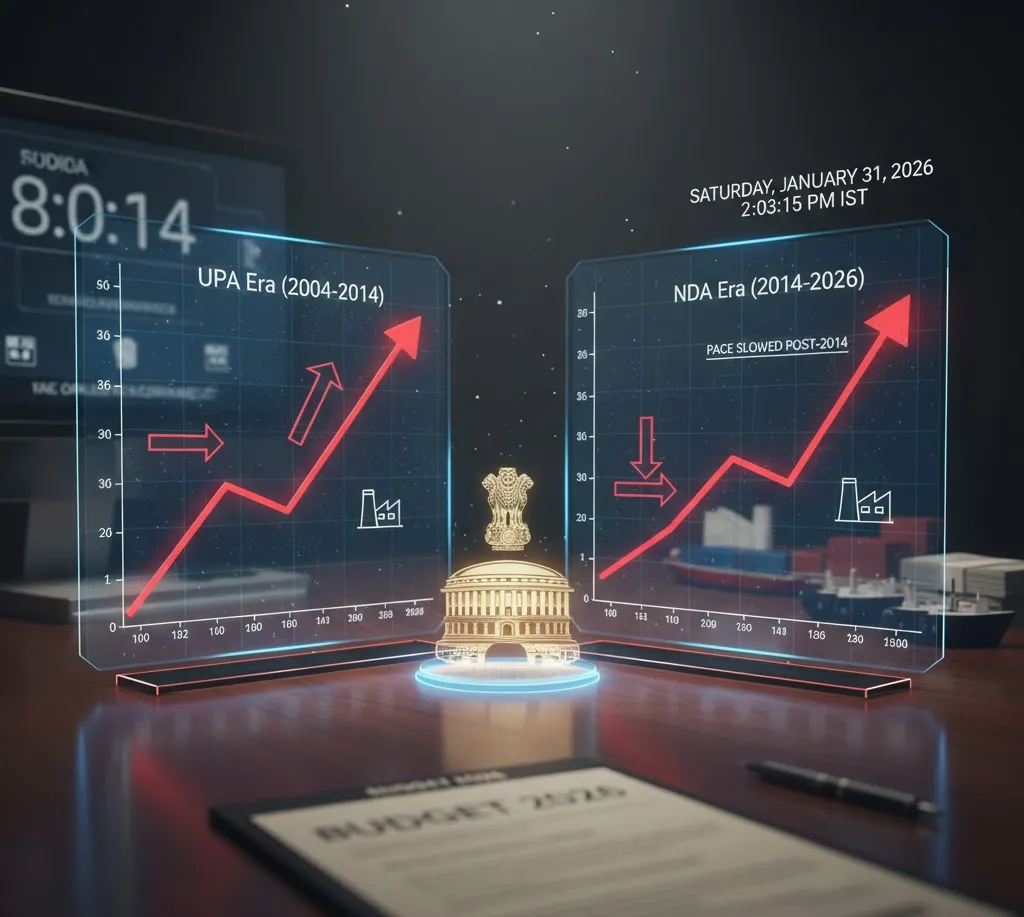
India’s merchandise trade deficit has remained a structural feature of the economy across political regimes, but Economic Survey 2026 data highlights a notable shift in its trajectory after 2014. While the deficit widened during both the UPA and NDA periods, the pace at which it expanded slowed significantly in the post-2014 years, largely due to moderated import growth.
Between FY 2004–05 and FY 2014–15, India experienced a phase of rapid trade expansion. Exports grew by over 400 per cent, driven by strong global demand and domestic growth, but imports expanded even faster, rising by nearly 446 per cent. This import-intensive growth model led to a sharp widening of the trade deficit, which increased nearly sixfold over the decade.
The period after 2014 presents a different picture. By FY 2024–25 (provisional), exports had nearly doubled from FY 2014–15 levels, while imports rose by about 122 per cent. Although the trade deficit widened substantially in absolute terms, the rate of deterioration slowed compared to the earlier decade. This moderation reflects a phase of consolidation rather than rapid expansion.
Under the Modi-led NDA, the policy focus shifted towards containing import dependence rather than engineering an immediate export surge. Initiatives such as “Make in India” were aimed at tempering the structural drivers of the trade gap. This approach unfolded amid challenging global conditions, including oil price volatility, the Covid-19 pandemic, supply-chain disruptions and geopolitical tensions.
The comparison between the two periods underscores differing economic phases rather than a simple success-versus-failure narrative. The UPA presided over an era of high trade growth with widening imbalances, while the NDA managed slower trade growth with greater restraint on import-led pressures. This distinction forms a key part of the economic context for Budget 2026.
କଟକ-ଭୁବନେଶ୍ୱର କମିଶନରେଟ୍ ପୋଲିସ ଅଧୀନରେ ଡ୍ୟୁଟି କରୁଥିବ...
ଓଡ଼ିଆ ପ୍ରତିଭାଙ୍କୁ ରାଇନାଙ୍କ ସମର୍ଥନ ରାଇନା କହିଛନ୍ତ...

ମୁମ୍ବାଇ: ସେଲିବ୍ରିଟିଙ୍କ ଶରୀର, ବୟସ, ଚେହେରା ଓ ବ୍ୟକ୍ତି...
ବଙ୍ଗୋପସାଗରରେ ପାଣିପାଗର ପରିବର୍ତ୍ତନ ମଧ୍ୟରେ ଓଡ଼ିଶା ଉପକ...

ଗୋଟିଏ ଦିନରେ କଲେକ୍ସନ୍ରେ ବଡ଼ ବୃଦ୍ଧି ସେପ୍ଟେମ୍ବର ୧୯...
ଓଡ଼ିଆ ଜାତିର ଆତ୍ମା ଭାବେ ପରିଚିତ ମହାପ୍ରଭୁ ଶ୍ରୀଜଗନ୍ନାଥଙ...

Daayra’ ସେପ୍ଟେମ୍ବର ୧୮ରେ ରିଲିଜ୍‌ ହୋଇଥିଲା...