










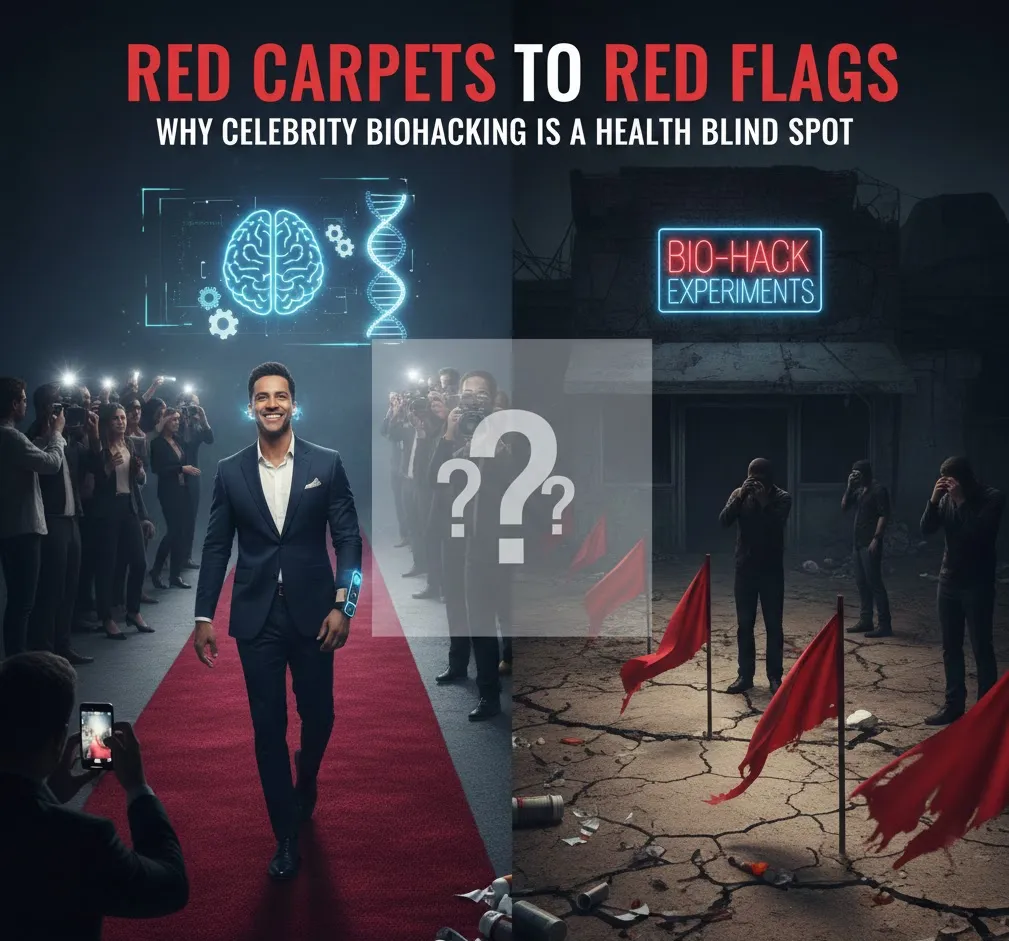
There was a time when celebrities influenced what we wore, watched, or ate. Today, they shape something far more personal: how we think about our bodies, our brains, and the notion that being human is no longer enough unless it is optimised.
As a health editor, what concerns me is not innovation itself. Science advances because people test boundaries. What worries me is how celebrity-led biohacking quietly reframes experimental, often unregulated practices as lifestyle upgrades—without evidence, ethical guardrails, or public understanding.
In glossy red carpet interviews or high-profile podcasts, biohacking has become the new status symbol: ice baths, glucose monitors for non-diabetics, wearable brain devices promising sharper focus, better sleep, deeper calm. What was once the domain of fringe experimenters or Silicon Valley labs is now marketed as everyday self-care, clean, minimalist, aspirational—and therein lies the risk.
Experimentation Wears a HaloBiohacking sits in a grey zone. It borrows the language of medicine but often operates outside it. Many publicly showcased interventions—neurostimulation headsets, cognitive wearables, metabolic “optimisation” tools—lack long-term, independent human studies. Some are approved only for limited therapeutic use; others exist in regulatory blind spots.
Yet when a celebrity casually mentions using a brain device to “unlock focus” or a founder posts daily body metrics like a performance dashboard, the implied message is clear: if they do it, so should you. These endorsements rarely mention risks. Instead, they frame experimentation as discipline or control—the price of excellence. Side effects, psychological dependency, or the fact that most bodies don’t need medical-grade intervention are left out of the narrative.
The Pressure to OptimiseCelebrity biohacking does more than inspire imitation—it normalises a culture of optimisation. Choosing not to “enhance” can feel like negligence. Ordinary fatigue is treated as a flaw, distraction becomes pathology, rest is laziness. Students and young professionals internalise the idea that attention, sleep, or mood must be engineered, not nurtured. Mental health, once approached with care, is reframed as a problem to hack.
Unlike prescription medicine, these tools rarely come with informed consent. No doctor explains the knowns, unknowns, or potential harms—a critical omission, especially for devices targeting the brain.
Brain Wearables Deserve ScrutinyThe human brain is a delicate, plastic ecosystem—not a muscle to train harder. Yet wearable neurotech is increasingly marketed as harmless, reversible, and universally beneficial. Terms like “non-invasive,” “training the brain,” or “natural” lower our guard, making intervention seem benign. What happens when attention is constantly externally modulated? When calm is device-induced instead of internally cultivated? Long-term effects for healthy users remain unknown. History shows technology often outpaces understanding: tobacco was once doctor-approved, hormone supplements were sold as vitality boosters. Normalisation precedes reckoning.
There’s also an ethical gap. Celebrities who experiment publicly are often wealthy and insulated. Their audience may not have the same access or safeguards. What looks like empowerment for the few becomes exposure for the many.
Health is Not a Tech UpgradeInnovation is welcome—wearables, neuroscience, and personalised health tools have promise when grounded in evidence and used with caution. But health is not a beta product. The brain is not a start-up waiting to be disrupted, and risk does not vanish because a practice is wrapped in celebrity credibility or minimalist design.
We urgently need a public conversation to match the hype: clear regulation, transparent evidence, and education about what is safe, what is experimental, and what may harm. When red carpets turn red flags into fashion, the cost is not paid by celebrities—it is quietly borne by society, taught that being human is no longer enough unless it is hacked.

ସୁନ୍ଦରଗଡ଼ ଜିଲ୍ଲା ବଣାଇରେ ଶନିବାର ସକାଳେ ପାଣିପାଗର ଏକ ଅ...
ବାଲେଶ୍ୱରରେ ସାମାନ୍ୟ କଥାକୁ ନେଇ ହୋଇଥିବା ବିବାଦ ଶେଷରେ ମ...
ଦକ୍ଷିଣ ଦିଲ୍ଲୀର ସତ୍ୟ ନିକେତନରେ ଭୁଶୁଡ଼ି ପଡ଼ିଥିବା ଏକ P...
ଉତ୍ତରପ୍ରଦେଶରେ ଶ୍ରମିକ ଓ ଅନ୍ୟାନ୍ୟ ଦୁର୍ବଳ ପରିବାରର ପିଲ...
ଦିଲ୍ଲୀର ସତ୍ୟ ନିକେତନରେ ‘Hostel Daze’ ନା...
ଓଡ଼ିଶାର ବିଭିନ୍ନ ଅଞ୍ଚଳରୁ ନାବାଳିକାଙ୍କୁ ନେଇ ୩ଟି ଦୁଷ୍କ...
ମହାରାଷ୍ଟ୍ରର ପୁଣେ ଓ ପିମ୍ପ୍ରି-ଚିଞ୍ଚୱାଡ ଅଞ୍ଚଳରେ ରବିବା...
ଓଡ଼ିଶାରେ ମନ୍ଦିରଗୁଡ଼ିକୁ ଟାର୍ଗେଟ୍ କରି ଚୋରି ଘଟଣା ଥମିବ...
ଆମେରିକାର Federal Bureau of Investigation (FBI) ମଞ୍...