

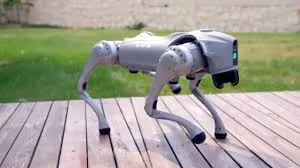
At the India AI Impact Summit 2026, a four-legged robotic dog quickly became one of the biggest attractions on the show floor. Demonstrating smooth walking, posing, and interactive movements, the robot drew large crowds and widespread social media attention.
The machine, introduced as “Orion” at the booth of Galgotias University, soon became the subject of online debate after viewers identified it as the Unitree Go 2, a commercially available robot developed by Unitree Robotics.
The Unitree Go 2 is a second-generation quadruped robot launched globally in 2023. Designed as an affordable AI-powered robot dog for education, research and robotics experimentation, it is widely used in labs and demonstration environments.
The robot weighs approximately 15–16 kg and measures around 70 x 31 x 40 cm. Built with a lightweight aluminium and engineering plastic body, it carries an IP54 rating for protection against dust and water splashes, making it suitable for both indoor and light outdoor use.
In terms of technology, the Go 2 comes equipped with:
Wide-angle 3D and 4D Ultra-wide LiDAR for mapping and obstacle avoidance
Cameras for visual perception
IMUs and joint encoders for balance and stability
An 8-core CPU (with the Pro model supporting up to 40 TOPS of AI computing power)
Wi-Fi 6 and Bluetooth connectivity
An 8,000mAh removable battery offering 1–2 hours of runtime (optional 15,000mAh upgrade available)
The entry-level Go 2 Air variant is priced globally at around $1,600 (approximately Rs 1.4–1.5 lakh), while higher-end versions like the Go 2 Pro cost up to $2,800 (around Rs 2.3–2.5 lakh), excluding shipping and import duties.
During the summit, the robot was presented under a broader AI initiative by the university. However, social media users quickly identified it as the commercially available Unitree model, leading to questions about whether it had been portrayed as an indigenous innovation.
Following the backlash, Galgotias University clarified in an official statement that it had not built the robot and was using it purely as a research and experimentation platform.
“Let us be clear — Galgotias has not built this robodog,” the university stated, adding that students were experimenting with it to expand their technical knowledge.
Subsequent reports suggested that the university had been asked to vacate its booth at the summit, though faculty representatives denied receiving any formal communication to that effect.
The controversy highlights a larger conversation about transparency in India’s fast-growing AI ecosystem. While purchasing global robotics platforms for research is common practice, public perception can quickly shift if communication around innovation claims lacks clarity.
The Unitree Go 2’s sudden visibility at a major AI event has therefore sparked discussions not just about the robot itself, but about credibility, accountability and how AI achievements are presented in the public domain.

ମ୍ୟାଲେରିଆ ପ୍ରତିରୋଧ କ୍ଷେତ୍ରରେ ଏକ ବଡ଼ ଅପଡେଟ୍ ଆସିଛି।...

ହଟିଲା Dhumavathiଙ୍କ ଚର୍ଚ୍ଚିତ ଡ୍ୟାନ୍ସ ସିନ୍ Netfl...

ବଙ୍ଗୋପସାଗରରେ ବଢ଼ୁଛି ପ୍ରଣାଳୀର ଶକ୍ତି ପୂର୍ବ-କେନ୍ଦ୍...

ସନ୍ଧ୍ୟାରେ ଭୁବନେଶ୍ୱରରେ ପହଞ୍ଚିବେ ପ୍ରସ୍ତାବିତ କାର୍ଯ...

SMA ଔଷଧକୁ ନେଇ କେରଳରେ ଚର୍ଚ୍ଚା ଓ ବିବାଦ ମଧ୍ୟରେ ସ୍ୱାସ୍...

JioHotstarରେ ଆସିବ ‘Ramayana: Part One’...

ପଞ୍ଜାବୀ ଗାୟକ ଓ ଅଭିନେତା ଦିଲଜିତ ଦୋସାଞ୍ଜଙ୍କ ଦିଲ୍ଲୀ କନ...

ଜାପାନୀ ପ୍ରତିନିଧି ଦଳର ଓଡ଼ିଶା ଗସ୍ତ ଓଡ଼ିଶାରେ ଜାପାନ...