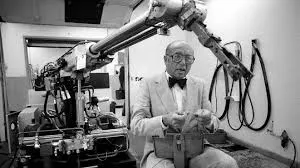
At a time when machines were only beginning to enter factory floors, Joseph Engelberger offered a powerful vision of how intelligent machines would reshape industry. Widely regarded as the Father of Robotics, Engelberger played a pivotal role in transforming robots from science fiction concepts into practical industrial tools.
In 1961, Engelberger helped deployUnimate, the world’s first industrial robot, at aGeneral Motorsfactory in New Jersey. The robot was designed to handle hot metal parts on an assembly line — a dangerous and physically demanding task for human workers.
At that time, robotics was still an emerging field. Definitions were fluid, and the long-term impact of automation was uncertain. Yet the successful deployment of Unimate marked the beginning of a new era in manufacturing.
Engelberger worked alongside inventorGeorge Devol, who created the original robotic arm design. Together, they foundedUnimation, the world’s first robotics company.
Their collaboration revolutionized manufacturing. Robots began performing repetitive, hazardous, and precision-based tasks with consistency and efficiency. This not only improved worker safety but also enhanced production speed and quality.
Over time, robotics expanded beyond automotive factories into electronics, healthcare, logistics, and research, becoming a cornerstone of industrial automation.
Engelberger consistently emphasized that robots were not meant to replace humans entirely. Instead, he believed machines would work alongside people, complementing human skills and enhancing productivity.
This collaborative vision remains highly relevant today. Modern robotics and artificial intelligence systems assist surgeons in operating rooms, automate warehouse logistics, power self-driving technologies, and support advanced research.
What began as a mechanical arm handling molten metal has evolved into intelligent systems capable of learning, adapting, and interacting with complex environments.
Joseph Engelberger’s work laid the foundation for today’s robotics revolution. His early efforts transformed factory automation and set the stage for the integration of robotics and AI across industries.
As intelligent machines continue to evolve, his belief in human-machine collaboration serves as a guiding principle — reminding us that technology, at its best, is designed to enhance human potential rather than replace it.

ମ୍ୟାଲେରିଆ ପ୍ରତିରୋଧ କ୍ଷେତ୍ରରେ ଏକ ବଡ଼ ଅପଡେଟ୍ ଆସିଛି।...

ନାଗୋୟା, ଜାପାନରେ ଚାଲିଥିବା ଏସିଆନ୍ ପାରା ଗେମ୍ସ ୨୦୨୬ରେ...

ପଶ୍ଚିମ ଓଡ଼ିଶାର ପ୍ରମୁଖ ଚିକିତ୍ସା ପ୍ରତିଷ୍ଠାନ ବୁର୍ଲା ଭ...

ଶୁକ୍ର ବକ୍ରୀକୁ ନେଇ କ’ଣ କୁହୁଛି ଜ୍ୟୋତିଷ? ଜ୍ୟ...

ଡର୍ମାଟୋଲୋଜିଷ୍ଟ ଡା. ଜୁଶ୍ୟା ଭାଟିଆ ସରିନ୍ ଭାରତୀୟ ତ୍ୱଚା...

SMA ଔଷଧକୁ ନେଇ କେରଳରେ ଚର୍ଚ୍ଚା ଓ ବିବାଦ ମଧ୍ୟରେ ସ୍ୱାସ୍...

ପୂର୍ବତନ ଭାରତୀୟ ଲେଗ୍‌ ସ୍ପିନର ଅମିତ ମିଶ୍ର ନିଜ ଅନ...

ଭାରତ ଓ ନ୍ୟୁଜିଲାଣ୍ଡ ମଧ୍ୟରେ ପାଞ୍ଚ ମ୍ୟାଚ୍ ବିଶିଷ୍ଟ T20...