





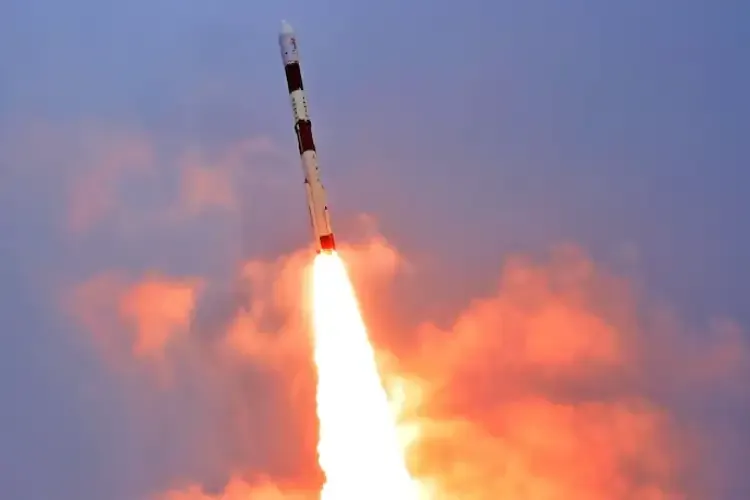
India’s PSLV-C62 mission, carrying the EOS-N1 (Anvesha) Earth observation satellite along with 15 co-passenger satellites, experienced an anomaly during flight on Monday, prompting ISRO to launch a detailed investigation. ISRO Chairman V. Narayanan stated that a disturbance was observed near the end of the third-stage (PS3) burn, which caused a slight deviation in the vehicle’s flight path.
According to ISRO, the mission proceeded normally until the latter part of the third stage, after which unexpected disturbances were detected. “We are analysing the data and will share details at the earliest,” Narayanan said, adding that the four-stage PSLV, with two solid and two liquid stages, performed as expected otherwise.
Launched from the First Launch Pad at Sriharikota, this marked ISRO’s first major mission of 2026, aiming to place the EOS-N1 Earth observation satellite into orbit. Conducted by NewSpace India Limited, it was the ninth dedicated commercial Earth observation mission, highlighting increased private-sector participation in India’s space programme.
Hyderabad-based Dhruva Space contributed seven satellites, including four developed in-house. The co-founder and CFO, Chaitanya Dora Surapureddy, explained that these satellites are designed for low data-rate communication and can be used by amateur radio operators, serving as a technology demonstration for future applications.

‘ଅର୍ଣ୍ଣବ’ ନାମ କିଏ ଦେଇଛି? ବାଂଲାଦେଶ &...
ପ୍ରଥମ ଇନିଂସ୍‌ରେ ୧୧୩, ପରେ ଅବିଶ୍ୱସନୀୟ ପ୍ରତ୍ୟାବର...

ଆନ୍ଧ୍ର ଉପକୂଳରେ ବଡ଼ ବିପଦର ଆଶଙ୍କା IMDର ନୂଆ ସୂଚନା...

ବାତ୍ୟା ‘ଅର୍ଣ୍ଣବ’ର ସମ୍ଭାବ୍ୟ ପ୍ରଭାବକୁ ନେ...

ବାତ୍ୟା ‘ଅର୍ଣ୍ଣବ’ର ପ୍ରଭାବରେ ଓଡ଼ିଶାର ବିଭ...
‘୨୦୨୮ ଅଲିମ୍ପିକ୍ସରେ ଖେଳିବାକୁ ଚାହୁଁଛି’...
ମୋହିତ ଶର୍ମାଙ୍କୁ ବୋଲିଂ କୋଚ୍ ଦାୟିତ୍ୱ ୩୮ ବର୍ଷୀୟ ମୋ...
ମ୍ୟାଚ୍ର ଶେଷ ମୁହୂର୍ତ୍ତରେ ଘଟିଲା ଘଟଣା ସୋମବାର ବାକୁର...