






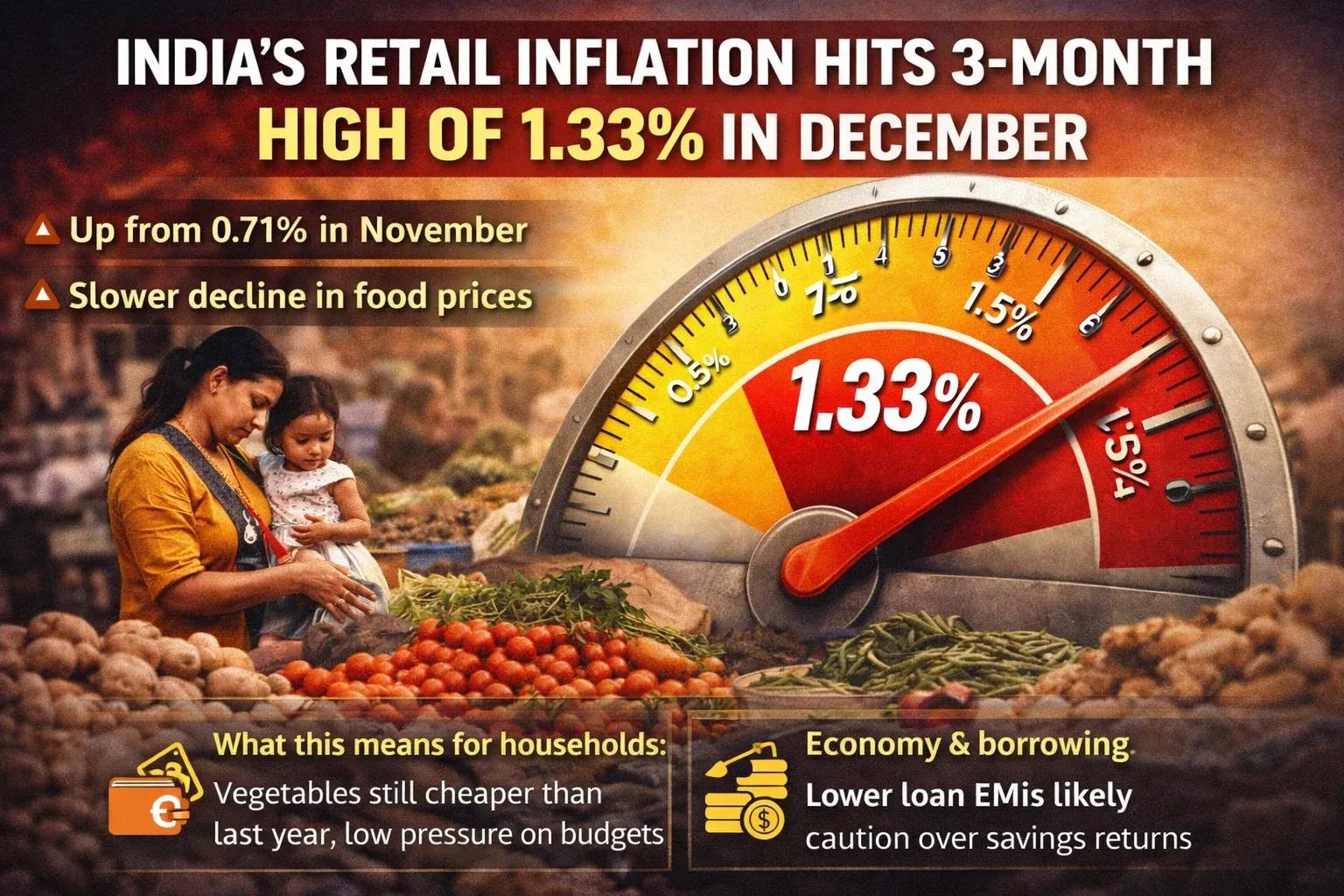
Food inflation, which has been in negative territory for months, declined2.71 per cent year-on-year in December, compared with a steeper3.91 per cent fall in November.
Vegetable prices were still much lower than last year, falling18.47 per cent, but the pace of decline slowed from22.20 per centin November. This moderation in food price deflation pushed overall inflation higher.
With inflation staying well below the Reserve Bank of India’s comfort zone, the central bank cut interest rates by25 basis pointslast month to support economic growth. Economists now expect further rate cuts in coming months if inflation remains subdued.
India’s economy is projected to grow7.4 per centin the current financial year, giving policymakers space to keep borrowing costs low even as global trade tensions persist.
For consumers, the rise in inflation does not mean higher prices at the grocery store just yet. Food items, especially vegetables, remain far cheaper than a year ago, keeping pressure on household budgets low.
However, lower inflation also meanslower deposit returns, while borrowers benefit fromcheaper home and personal loansas interest rates decline.
Economists say inflation is likely to remain under control in the near term, but any rise in food or fuel prices could change the trend. For now, India continues to enjoy one of the lowest inflation rates among major economies.
କେନ୍ଦ୍ରାପଡ଼ା ଜିଲ୍ଲା କୋରୁଆ ବଜାରରେ ଅବସରପ୍ରାପ୍ତ ଜଣେ ବ...
ପୁରୀ ଜିଲ୍ଲା ଧରଣୀକୁଦି ଗାଁରେ ଜଙ୍ଗଲୀ ବାରହା ଆକ୍ରମଣରେ ୫...
ପାକିସ୍ତାନରେ ଇନ୍ଧନ ଓ ଅନ୍ତର୍ଜାତୀୟ ତୈଳ ମୂଲ୍ୟକୁ ନେଇ ଚା...

‘Hanuman Ansh’ବକ୍ସ ଅଫିସ୍ରେ ଲଗାତାର ଚମକ...
କେନ୍ଦ୍ରାପଡ଼ା ଜିଲ୍ଲା ପାଇଁ ଆସିଛି ଗର୍ବର ଖବର। ଜିଲ୍ଲାର...

ନ୍ୟାସନାଲ୍ ଆୱାର୍ଡ ବିଜେତା ଫିଲ୍ମ ନିର୍ଦ୍ଦେଶକ ତଥା **Fil...

ଅଗଷ୍ଟ ୨୬ରେ ନେପାଳ-ଚୀନ୍ ସୀମା ନିକଟ ହିମାଳୟ ଅଞ୍ଚଳରେ ଘଟି...

‘କଚ୍ଚା ବାଦାମ’ ରିଲ୍‌ ଜରିଆରେ ଲୋକପ୍ର...

ଅଭିନେତାରୁ ରାଜନେତା ଏବଂ ପରେ ତାମିଲନାଡୁର ମୁଖ୍ୟମନ୍ତ୍ରୀ...
ଓଡ଼ିଶାର ପ୍ରମୁଖ ମହିଳାକେନ୍ଦ୍ରିକ କଲ୍ୟାଣ ଯୋଜନାSubhadra...