






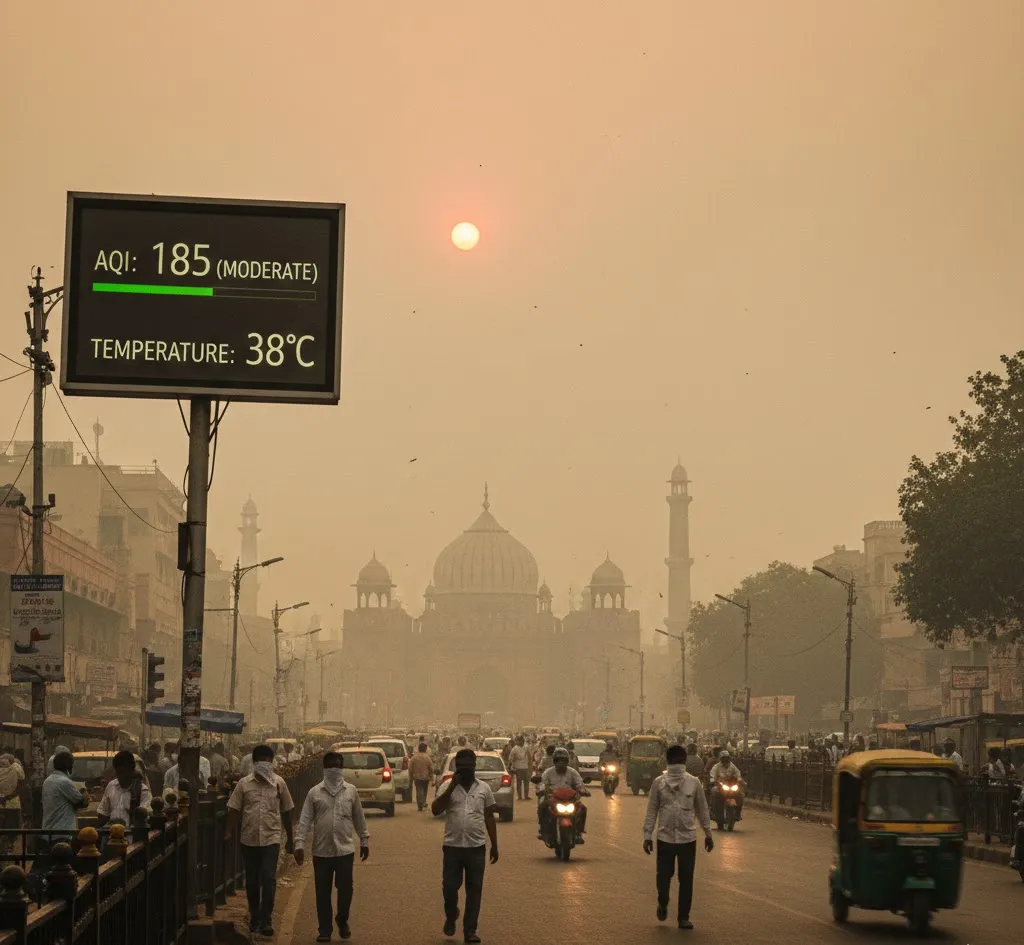
Delhi recorded a marginal improvement in air quality on Tuesday after two days of worsening pollution levels, though the situation remains a serious concern. As of 8 am, the Air Quality Index (AQI) stood at 397 in the ‘very poor’ category, down from 418 on Monday and 439 on Sunday, according to data from the Central Pollution Control Board (CPCB).
Despite the slight dip in pollution levels, a thin layer of smog continued to hang over the national capital. Residents experienced some relief from the biting cold as both maximum and minimum temperatures rose above seasonal norms, but the warmer conditions have done little to disperse pollutants.
According to the Air Quality Early Warning System (AQEWS), Delhi’s air quality is expected to remain in the ‘severe’ to ‘very poor’ category over the next two days. The outlook remains grim beyond that period as well, with forecasts indicating that air quality could stay in the ‘very poor’ range for at least the following six days.
Several parts of the city continue to record hazardous air quality levels. Monitoring stations at ITO reported an AQI of 414, while Akshardham recorded an AQI of 445, placing both locations in the ‘severe’ category. These figures underline the uneven distribution of pollution across the capital and the continued health risks faced by residents.
As per CPCB standards, an AQI between 0 and 50 is classified as ‘good’, 51 to 100 as ‘satisfactory’, 101 to 200 as ‘moderate’, 201 to 300 as ‘poor’, 301 to 400 as ‘very poor’, and 401 to 500 as ‘severe’.
In response to the persistent pollution, restrictions under Stage IV of the Graded Response Action Plan (GRAP-4) remain in force across the city. These measures include a ban on certain construction activities, restrictions on the entry of heavy vehicles, and enhanced monitoring and regulation of industrial emissions to curb further deterioration in air quality.
Weather conditions have also played a significant role in sustaining the smog. After a prolonged spell of intense cold, Delhi has witnessed a noticeable rise in both daytime and nighttime temperatures. On Monday, the maximum temperature touched 26.7 degrees Celsius—7.1 degrees above the seasonal average.
Meteorologists believe that this unusual warmth is hindering the vertical and horizontal dispersal of pollutants, effectively trapping them closer to the ground. According to the India Meteorological Department (IMD), the maximum and minimum temperatures on Tuesday are expected to hover around 24 degrees Celsius and 8 degrees Celsius, respectively.
With no immediate relief in sight, authorities continue to urge residents to limit outdoor exposure, particularly during early morning and late evening hours, as Delhi grapples with persistent smog despite a marginal improvement in air quality.
ରକ୍ତଦାନ ବ୍ୟବସ୍ଥାକୁ ଆହୁରି ସୁସଂଗଠିତ ଓ ଟ୍ରାକ୍‌ଯୋ...

ହାଇୱେ କଡ଼ରୁ ଜଣେ ଅଜଣା ବ୍ୟକ୍ତିଙ୍କ ମୃତଦେହ ମିଳିବା ପରେ...

ପଶ୍ଚିମବଙ୍ଗର ଭୋଟର ତାଲିକାର Special Intensive Revisio...

କେନ୍ଦ୍ରାପଡ଼ା ଜିଲ୍ଲା କୋରୁଆ ବଜାରରେ ଅବସରପ୍ରାପ୍ତ ଜଣେ ବ...

ମଧ୍ୟପ୍ରଦେଶର ବାଲାଘାଟ ଜିଲ୍ଲାର କିରନାପୁରରେ ପୁଲିସ କାର୍ଯ...

ଦିଲ୍ଲୀ ୟୁନିଭର୍ସିଟିରDUSU ନିର୍ବାଚନ ୨୦୨୬ରେ ଏଥର କେବଳ କ...

ଇନ୍ଦୋରରୁ ଏକ ହୃଦୟସ୍ପର୍ଶୀ ଘଟଣା ସାମ୍ନାକୁ ଆସିଛି। ଲତା ବ...
ବିଶ୍ୱ ସ୍ୱାସ୍ଥ୍ୟ ସଂଗଠନ (WHO)**ର ପରବର୍ତ୍ତୀ ମହାନିର୍ଦ୍...
ବାୟୁ ପ୍ରଦୂଷଣ କେବଳ ଫୁସ୍ଫୁସ୍ ଓ ଶ୍ୱାସକ୍ରିୟା ଉପରେ ପ୍ରଭ...
ଭୁବନେଶ୍ୱରସ୍ଥିତ ଲୋକସେବା ଭବନ ପରିସରକୁ ‘ତମାଖୁମୁକ...