

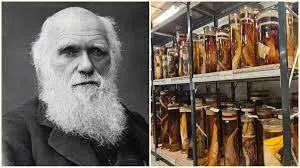
On Darwin Day, February 12, the world remembers Charles Darwin, the naturalist whose insights fundamentally changed how humans view life. Yet behind the celebrated theory of evolution lies a story of caution, fear, and intense personal reflection.
After returning from the HMS Beagle voyage in 1836, Darwin began studying his collections of fossils, finches, and other specimens. By 1838, inspired by Thomas Malthus’s work on population growth, he formulated the principle of natural selection. Species, he realized, were not fixed—they evolved. In his notebooks, he sketched the “tree of life,” a visual representation of these relationships.
Darwin had once trained for the clergy at Cambridge and lived in deeply religious Victorian England. Publishing the idea of evolution risked challenging Biblical creation and could have brought public condemnation. His wife, Emma, was devout, and Darwin worried about her feelings as well as society’s response. He described the idea as being “like confessing a murder.”
By 1844, Darwin had written a detailed essay explaining natural selection, instructing Emma to publish it if he died unexpectedly. But he delayed publication, spending eight years studying barnacles and corresponding extensively with breeders and scientists. Chronic illness, anxiety, perfectionism, and the sheer magnitude of the claim contributed to this careful preparation.
In June 1858, a letter from Alfred Russel Wallace outlined a theory nearly identical to Darwin’s. Darwin feared losing credit for his work. Friends Charles Lyell and Joseph Hooker arranged a joint presentation of Darwin’s and Wallace’s ideas at the Linnean Society in July 1858. The following year, On the Origin of Species was published and sold out immediately.
Historians point to multiple reasons:
Fear of religious backlash
Concern for family reputation
Chronic illness and anxiety
Perfectionism and need for overwhelming proof
The monumental implications for humanity’s worldview
Darwin knew publishing too early could mean ruin; too late could mean obscurity. In the end, timing and Wallace’s letter forced history’s hand.
Darwin’s story reminds us that revolutionary ideas often come with hesitation, reflection, and personal struggle. He was cautious, careful, and deeply human. For twenty years, he wrestled with an idea that would change the world—and when he finally revealed it, science was forever transformed.

ଜିଓ IPO ଭାଙ୍ଗିଲା ପୁରୁଣା ରେକର୍ଡ ୧ କୋଟି ଆବେଦନର ମା...

ରୁପାରେ ଆହୁରି ତୀବ୍ର ହ୍ରାସ ବର୍ତ୍ତମାନର ମୂଲ୍ୟବାନ ଧା...

MCXରେ ରୁପା ଦର କାହିଁକି ଖସିଲା? ଘରୋଇ ବଜାରରେ ରୁପା ସ...

୫୮ ବର୍ଷରେ ଅବସର ନେଲେ କ’ଣ ହେବ? EPFO ଅନୁଯାୟୀ...