





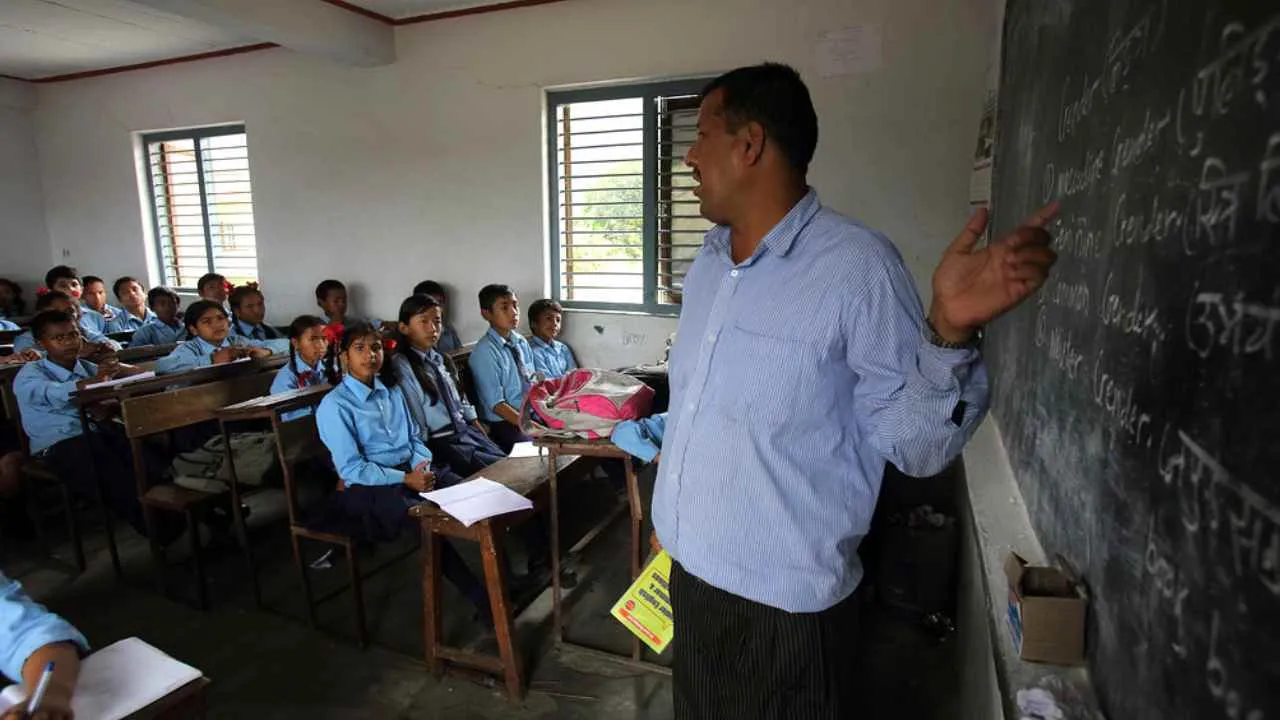
A disturbing incident from Jamjhor village in Chhattisgarh’s Surguja district has brought renewed attention to systemic gaps in rural education. At a government primary school, students were found being taught not by qualified teachers, but by the school sweeper, as no appointed teachers were present during class hours.
The video of the incident went viral on social media, sparking widespread concern about classroom accountability. Official records show that the school has a headmaster and two teachers posted, yet none were present when classes were underway. The headmaster later claimed he was unaware of the situation, raising further questions about supervision and oversight.
The case mirrors broader national trends. While the ASER 2024 report notes an improvement in average teacher attendance to 87.5%, it still means more than one in ten teachers are absent on a typical school day. Earlier ASER findings also highlight weak foundational learning in rural India, with many children unable to meet basic reading and arithmetic benchmarks.
Experts warn that such lapses directly affect early literacy and numeracy, eroding trust in public education and disadvantaging children in remote areas. As attention grows, the focus now shifts to whether authorities will take corrective action and ensure that classrooms have teachers where they are meant to be.

ଗଣତନ୍ତ୍ରକୁ ବଦନାମ କରିବାର ଚେଷ୍ଟା’ ରାଞ୍ଚିରେ...
ହଟିଲା Dhumavathiଙ୍କ ଚର୍ଚ୍ଚିତ ଡ୍ୟାନ୍ସ ସିନ୍ Netfl...

CJPକୁ କେବେ ସମର୍ଥନ କରିନାହୁଁ’ ଅନ୍ନାମଲାଇ କହି...

ଚେନ୍ନାଇରେ ଶୁକ୍ରବାର ଭୋଟର ତାଲିକାର **Special Summary...
JioHotstarରେ ଆସିବ ‘Ramayana: Part One’...

Meta Glass ପାଇଁ ମୋର ସନ୍ଦେହ ହେଲା’ ଶିବକୁମାର...
ପଞ୍ଜାବୀ ଗାୟକ ଓ ଅଭିନେତା ଦିଲଜିତ ଦୋସାଞ୍ଜଙ୍କ ଦିଲ୍ଲୀ କନ...
ଅକ୍ଟୋବର ୧୮ ତାରିଖରେ ମୁମ୍ବାଇର ଜୁହୁ ଅଞ୍ଚଳରେ ଟାଇଗର ଶ୍ର...