






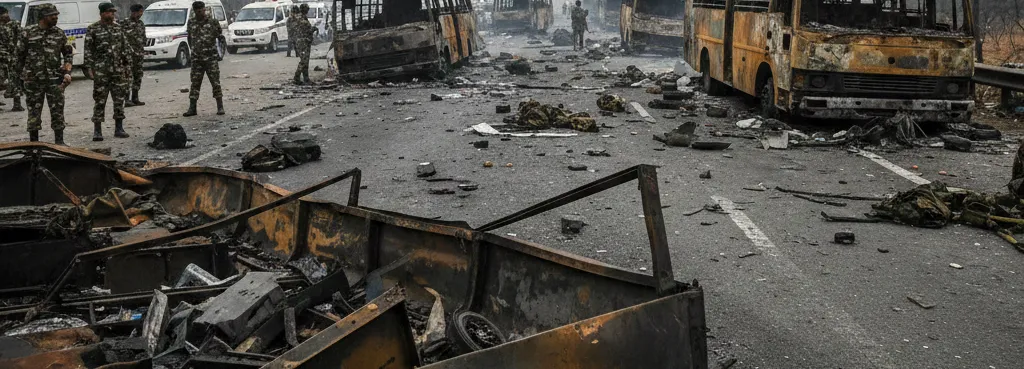
February 14, 2019, remains one of the darkest days in India’s fight against terrorism. On that afternoon, a suicide bomber carried out a devastating attack on a convoy of the Central Reserve Police Force (CRPF) along the Jammu–Srinagar National Highway.
The attack took place near Lethapora in Pulwama district, when Adil Ahmad Dar rammed an explosives-laden vehicle into the convoy. The massive explosion claimed the lives of 40 CRPF personnel, making it one of the deadliest terror attacks on Indian security forces in recent history.
The Pakistan-based terrorist organisation Jaish-e-Mohammed (JeM) claimed responsibility for the attack. Investigations later revealed that the attacker used a Maruti EECO vehicle modified to carry nearly 200 kilograms of explosives, including RDX and gelatin sticks. The scale and precision of the blast underscored the meticulous planning behind the assault.
India’s Retaliation: The Balakot Airstrike
In response to the Pulwama terror attack, India launched a major counter-terror operation on February 26, 2019. The mission, widely known as the Balakot airstrike, targeted terrorist infrastructure across the border in Pakistan.
A formation of 12 Indian Air Force Mirage 2000 fighter jets carried out precision strikes on a JeM training camp located in Balakot. The operation marked the
first time since the 1971 war that Indian fighter aircraft struck deep inside Pakistani territory.
Indian authorities stated that the strike eliminated a significant number of terrorists, trainers, and senior operatives at the facility. Pakistan, however, disputed the claims, asserting that the strikes did not cause casualties and hit a forested area instead. The contrasting narratives intensified diplomatic tensions between the two countries.
Escalation and De-escalation
The airstrike led to heightened hostilities between India and Pakistan. On February 27, Pakistan conducted retaliatory air operations, leading to an aerial engagement. During the confrontation, an Indian MiG-21 Bison aircraft was shot down, and its pilot, Abhinandan Varthaman, was captured by Pakistani forces.
His capture and subsequent release days later significantly escalated tensions but also paved the way for diplomatic efforts aimed at de-escalation. The episode drew global attention, with several world powers urging restraint from both nuclear-armed neighbours.

ଇଂଲଣ୍ଡ ଓ ପାକିସ୍ତାନ ମଧ୍ୟରେ ଲର୍ଡ୍ସରେ ଚାଲିଥିବା ଟେଷ୍ଟକ...
ପ୍ୟାରିସରେପ୍ରିୟଙ୍କା ଚୋପ୍ରା ଓ ଜେନିଫର ଲରେନ୍ସଙ୍କ ଏକ ମଜ...
ଶିରୋମଣି ଅକାଳୀ ଦଳ (ପୁନର ସୁରଜିତ) ବିଜେପି ସହ ମେଣ୍ଟକୁ ନ...
ଭାରତୀୟ ସିନେମାରେ ମହିଳାଙ୍କୁ କିପରି ଉପସ୍ଥାପନ କରାଯାଉଛି,...

୨୦୨୭ ବିଧାନସଭା ନିର୍ବାଚନ ପୂର୍ବରୁ ଉତ୍ତରପ୍ରଦେଶ, ପଞ୍ଜାବ...

ମେଷ ଏହି ସପ୍ତାହରେ କାର୍ଯ୍ୟକ୍ଷେତ୍ରରେ ନୂଆ ସୁଯୋଗ ମିଳ...
‘ବିଗ୍ ବସ୍ ୨୦’ର ଗ୍ରାଣ୍ଡ ପ୍ରିମିୟର ଶୁଟିଂ...

ଭବିଷ୍ୟତ ବିଷୟରେ ଜାଣିବା ପାଇଁ ଲୋକଙ୍କୁ ଜ୍ୟୋତିଷଙ୍କ ସହ ଯ...
ରକିଂ ଷ୍ଟାର୍ ୟଶଙ୍କ ଅଭିନୀତ‘Toxic: A Fairy Tale...
