




In January 2026, the University Grants Commission (UGC) notified a new set of Promotion of Equity in Higher Education Institutions Regulations, replacing a framework that had governed anti-discrimination measures on campuses since 2012. Framed as part of the National Education Policy 2020’s push for equity and inclusion, the regulations aim to strengthen protections against caste-based and other forms of discrimination in universities and colleges across India.
The UGC has justified the overhaul by pointing to a sharp rise in reported complaints. Official data submitted to Parliament and the Supreme Court shows that caste-based discrimination complaints increased by more than 118 percent over five years, rising from 173 cases in 2019–20 to 378 in 2023–24. In total, 1,160 complaints were reported from over 2,200 higher education institutions during this period. According to the regulator, these figures indicate that existing mechanisms were inadequate and largely symbolic.
Critics, however, argue that the absolute number of complaints remains small when viewed against the scale of India’s higher education system and population. They question whether such data justifies a compliance-heavy framework with strict timelines, penalties and monitoring bodies. Others contend that policies such as reservation already reinforce caste identities, making the elimination of caste-based distinctions more complex.
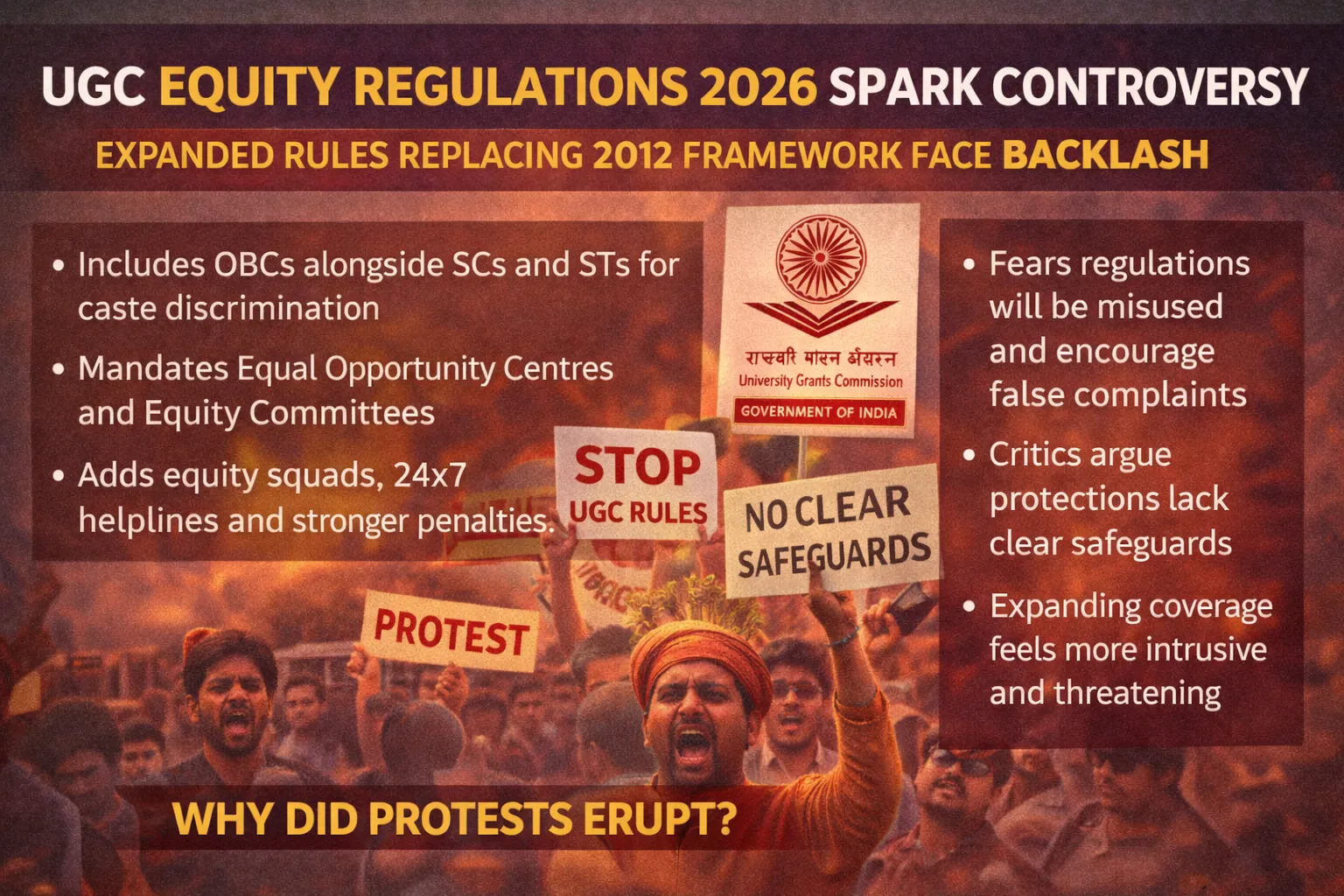
One of the most consequential changes in the 2026 regulations is the explicit inclusion of Other Backward Classes (OBCs) within caste-based discrimination protections. While the 2012 rules largely focused on Scheduled Castes and Scheduled Tribes, the new framework extends formal coverage to OBC students and staff. Given that SC, ST and OBC students together account for over 60 percent of total higher education enrolment, this shift significantly expands the scope of the regulations and has been a major trigger for resistance.
The enforcement structure has also been dramatically expanded. The earlier system centred on an Anti-Discrimination Officer and an Equal Opportunity Cell. The 2026 rules mandate Equal Opportunity Centres, multi-member Equity Committees with compulsory representation, equity squads, equity ambassadors, 24×7 helplines, online grievance portals, time-bound inquiries and mandatory reporting to the UGC. Non-compliance can result in withdrawal of funding, degree-granting powers or institutional recognition.
Despite these sweeping changes, the regulations do not explicitly define false or malicious complaints, nor do they prescribe penalties for proven misuse. This absence has become the core concern for protesters, who fear reputational damage and lack of due process. Supporters argue that adding such clauses could discourage genuine victims from reporting discrimination.
At its heart, the controversy reflects a broader national debate about how India balances protection for historically disadvantaged groups with institutional fairness, due process and trust in grievance mechanisms. Whether the 2026 UGC regulations succeed will depend not only on intent, but on transparent implementation and future refinements that address concerns from both sides.
୨୬ରେ ବାତ୍ୟା ରୂପ ନେବା ସମ୍ଭାବନା IMDର ବର୍ତ୍ତମାନର ଟ...

ପଞ୍ଜାବୀ ଗାୟକ ଓ ଅଭିନେତା ଦିଲଜିତ ଦୋସାଞ୍ଜଙ୍କ ଦିଲ୍ଲୀ କନ...

ସ୍ତନ କର୍କଟ ବା Breast Cancer ବିରୋଧରେ ଏକ ନୂଆ ଔଷଧକୁ ନ...
ବଙ୍ଗୋପସାଗରରେ ନୂଆ ପାଣିପାଗ ପ୍ରଣାଳୀ IMDର ସମୁଦ୍ର ବୁ...
୨୬ ଅକ୍ଟୋବରରେ ବାତ୍ୟା ରୂପ ନେଇପାରେ IMDର ସଦ୍ୟତମ ବୁଲ...

JioHotstarରେ ଆସିବ ‘Ramayana: Part One’...

ବୟସ ବଢ଼ିବା ସହ ଫର୍ଟିଲିଟିରେ ପରିବର୍ତ୍ତନ ଅଧିକ ବୟସରେ...
ଅକ୍ଟୋବର ୨୫ ପରେ ସ୍ପଷ୍ଟ ହେବ ଚିତ୍ର ବର୍ତ୍ତମାନ ସମୟରେ...