






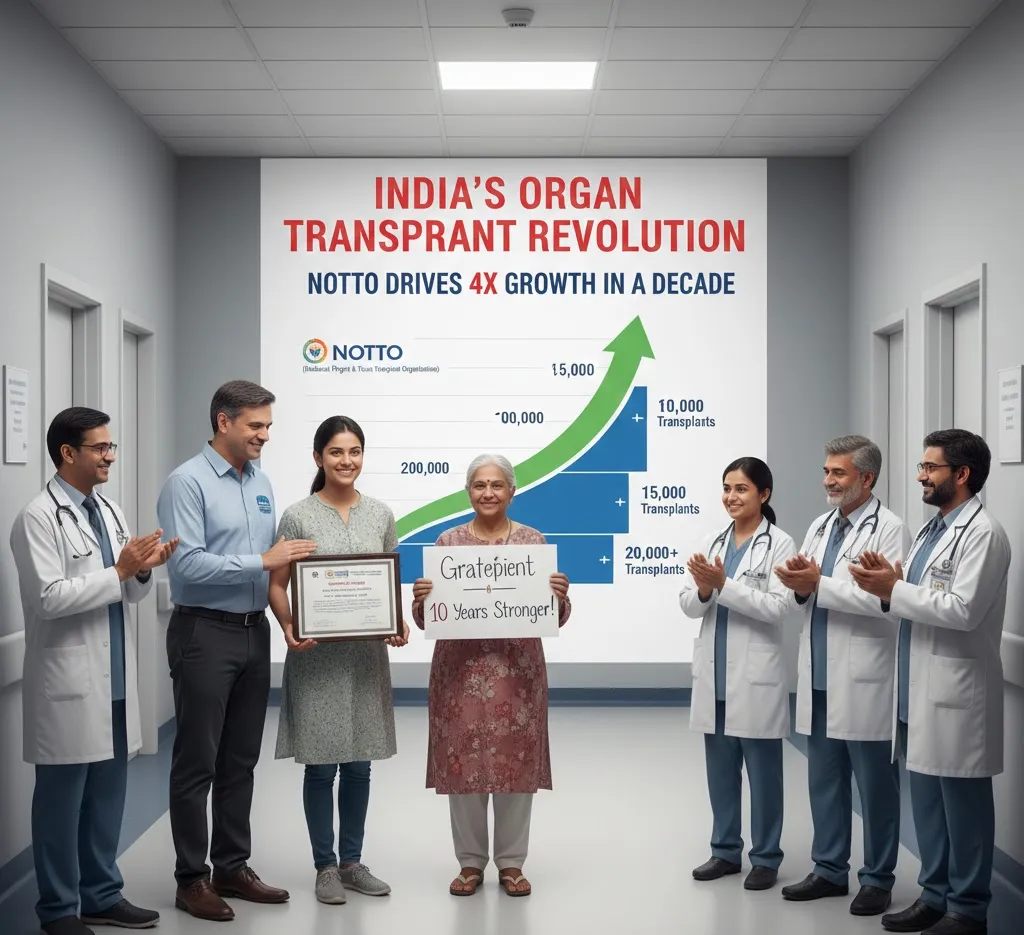
India has achieved a remarkable milestone in organ donation and transplantation, reflecting major progress in public healthcare and institutional reform. Spearheaded by the National Organ and Tissue Transplant Organization (NOTTO), annual transplants have increased from fewer than 5,000 in 2013 to nearly 20,000 in 2025, marking a fourfold growth. Notably, around 18% of these transplants now involve organs donated by deceased donors, indicating a significant rise in cadaver donations.
Technology has played a key role in this transformation. Since September 2023, over 4.8 lakh people have registered for organ donation using the Aadhaar-based digital system, improving transparency and efficiency. In 2025 alone, more than 1,200 families consented to donate organs of their deceased loved ones, saving thousands of lives. Each donor is increasingly contributing multiple organs, maximizing the life-saving impact.
India has also emerged as a global leader in complex transplant procedures, particularly hand transplants, while achieving international-standard outcomes at lower costs. Government reforms have strengthened NOTTO, improved transplant registries, standardized protocols, and enabled faster organ transport through green corridors.
Public awareness campaigns, community participation, and strong advocacy from leaders including Narendra Modi through programs like Mann Ki Baat have further accelerated the movement. With continued focus on infrastructure, governance, and citizen participation, India is building a self-reliant, transparent, and equitable transplant ecosystem.

ଲ ଯିବା ବାଟରେ ତୀରମାଡ଼ ଅଭିଯୋଗ ସୋମବାର ସମ୍ବଲପୁର ଜିଲ...
ଗୁରୁଗ୍ରାମରDLF Primus ପ୍ରକଳ୍ପକୁ ନେଇ ସୁପ୍ରିମକୋର୍ଟ କଡ...
ବୀମା ପଲିସି କିଣିବା ପରେ ଅନେକ ଲୋକଙ୍କ ପାଇଁ ସବୁଠୁ ବଡ଼ ସ...

ଜନଶୁଣାଣିରେ ଅଭାବନୀୟ ଘଟଣା ରାୟଗଡ଼ା ଜିଲ୍ଲାପାଳଙ୍କ ଜନ...
ଟାଟା ମାଲିକାନାଧୀନJaguar Land Rover (JLR)ବ୍ରିଟେନ୍ରେ...

ବର୍ଷା ଆସିଲେ ସ୍କୁଲ ପାଲଟିଯାଏ ଦ୍ୱୀପ ଢେଙ୍କାନାଳ ଭୁବନ...

ରୋଜଗାର ପାଇଁ ଯାଇଥିଲେ, ଫେରିଲା ମୃତଦେହ ରାୟଗଡ଼ ବ୍ଲକ...
ମାରୁତି ସୁଜୁକି କାର୍ କିଣିବାକୁ ଯୋଜନା କରୁଥିବା ଗ୍ରାହକଙ୍...