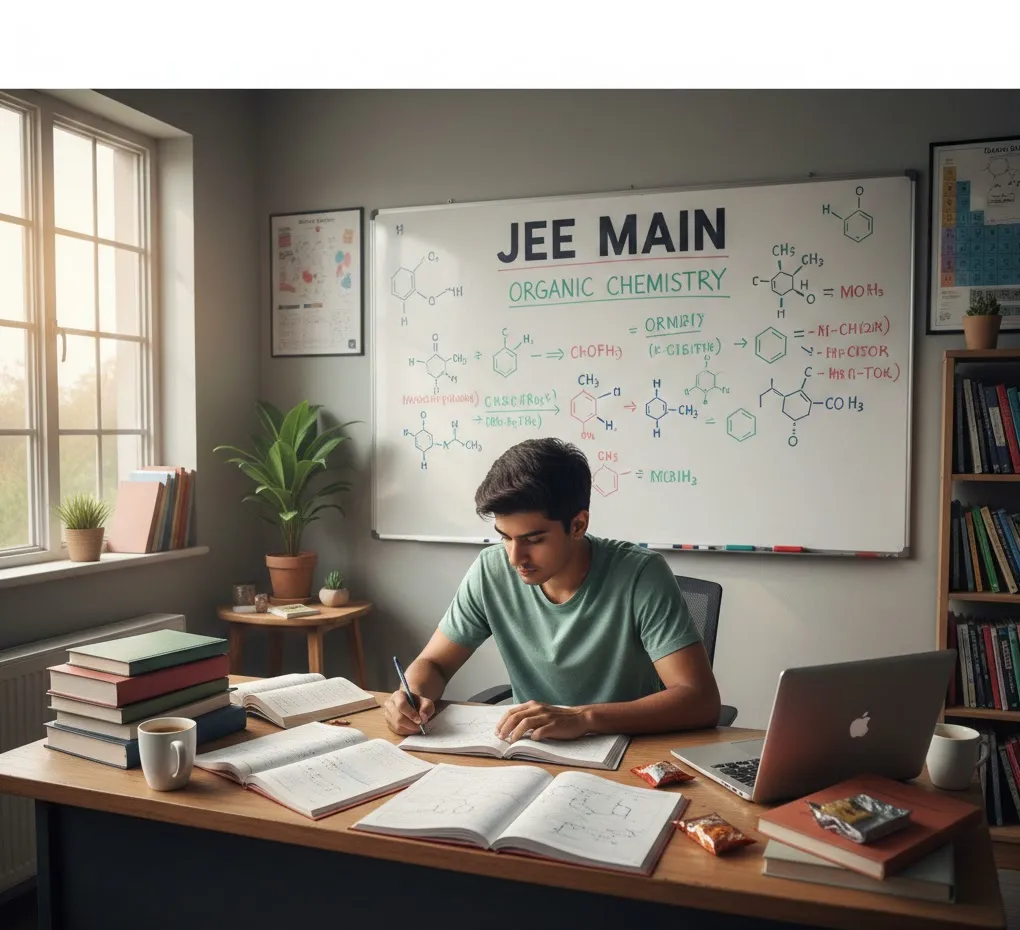
One of the biggest fears students have aboutOrganic Chemistryis the belief that it must be memorised. Many assume they need to remember hundreds of reactions, numerous named reactions, and lengthy mechanisms. In reality, the opposite is true. WhenGeneral Organic Chemistry (GOC)is understood thoroughly, more than half of Organic Chemistry becomes intuitive and easy. This is why GOC is often called the“game-changer” of chemistry.
Thefirst pillar of GOCis understandingacid–base strength. Three key factors—resonance, hyperconjugation, and the inductive effect—govern the behaviour of organic molecules. Once you can identify electron-withdrawing and electron-donating groups, questions related toacidity, basicity, stability, and reactivitybegin to solve themselves logically.
Thesecond crucial areais thestability of reaction intermediates. Organic Chemistry cannot progress without a clear understanding ofcarbocations, carbanions, and free radicals. The core rule is simple:greater resonance means greater stability. Rather than merely memorising terms like hyperconjugation or inductive effect, students should learn todemonstrate these concepts using arrow mechanisms. Once arrow pushing becomes clear, the need to cram named reactions reduces significantly.
Isomerismis another essential component of GOC. Questions onstructural isomerism, geometrical isomerism, and optical activityappear regularly in JEE Main. The most effective strategy is todraw the structure first, then write thecorrect IUPAC name, and only after that analyse stereochemistry. Attempting to answer questions by looking only at options—without drawing structures—is one of the most common mistakes students make.
Several chapters in Organic Chemistry are deeply interconnected. Topics such asalkyl halides, alcohols, ethers, aromatic compounds, Grignard reagents, carbonyl compounds, carboxylic acids, and aminesshould be studied as a single, integrated unit. Learning reactions by connectingreactant, reagent, and product in one flowmakes revision easier and improves retention.
Finally, topics likecarbohydrates, proteins, DNA, vitamins, hormones, and physical propertiesrequire systematic understanding and proper guidance to score well.
Draw structures of10 organic molecules
Arrange them inincreasing or decreasing order of acidity or basicity
Writeone-line logic-based reasonsfor each
Revise thereagents involved
Mastering GOC does not mean memorising everything—it means converting nearly half of Organic Chemistry into“recognise-at-first-sight” questions. That is the real shortcut and the reason Organic Chemistry can become one of thehighest-scoring sections in JEE Main.
(Inputs from Nitin Vijay, Educator and Founder, Motion Education, Kota)

ଭୁବନେଶ୍ୱର, ୧୭/୧୦: ଦଶହରାରେ ଓଡ଼ିଶାରେ ପାଗ ଭଲ ରହିବା ସମ...

ଅକ୍ଟୋବର ୧୯ରୁ ୨୫ ମଧ୍ୟରେ ବିଭିନ୍ନ OTT ପ୍ଲାଟଫର୍ମରେ ଦର୍...

ବଙ୍ଗୋପସାଗରରେ ସମ୍ଭାବ୍ୟ ବାତ୍ୟାକୁ ନେଇ ସୋସିଆଲ ମିଡିଆ ଓ...

ବଙ୍ଗୋପସାଗର ଉପରେ ପୁଣି ଏକ ନୂଆ ପାଣିପାଗ ପ୍ରଣାଳୀ ଗଠନ ନେ...

OTT ଦୁନିଆରେ ମାଲୟାଲମ୍‌ର ନୂଆ ୱେବ୍ ସିରିଜ୍ &lsquo...

ଦିଲ୍ଲୀ-NCRରେ ପୁଣି ପାଗ ବଦଳିବାକୁ ଯାଉଛି। ଅକ୍ଟୋବର ୧୬,...

‘Roadies Rebirth’ ପୁଣି ଫେରିଛି, ଏଥର ଏକ...

ମୁମ୍ବାଇରେ ଚାଲିଥିବା ଦୁର୍ଗାପୂଜା ଉତ୍ସବରେ ବଲିଉଡ୍ ଅଭିନେ...