






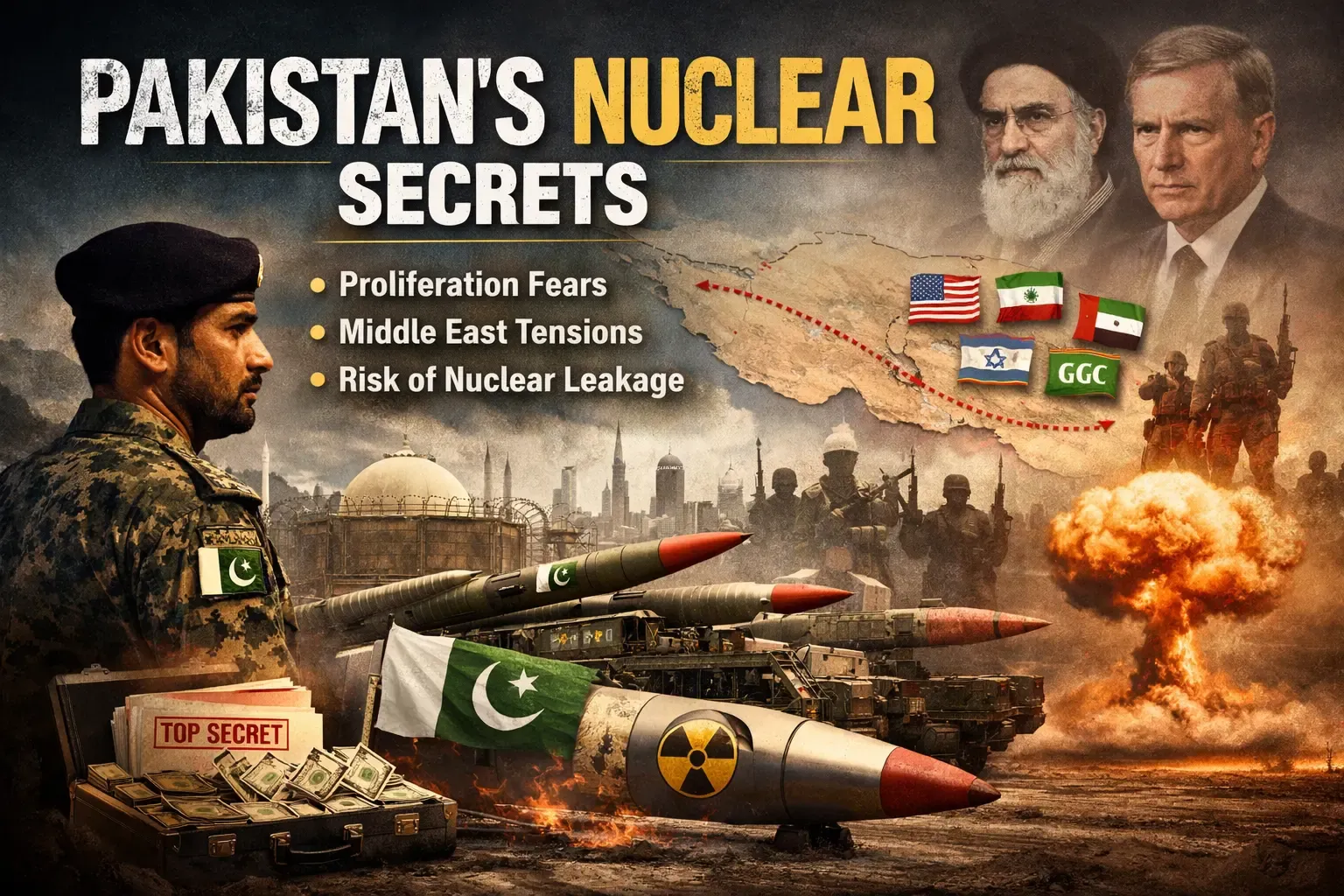
Analysts and diplomats increasingly believe that Pakistan’s nuclear arsenal could become adangerous bargaining chipamid economic pressure, regional turmoil and shifting alliances in the Middle East.
Veteran Pakistani journalistNajam Sethirecently reiterated that Pakistan’s nuclear weapons are fundamentally aimed atdeterring India, not threatening the West or Israel.
According to Sethi, Pakistan recognises that it cannot matchIndia’s conventional military strength, making nuclear weapons the bedrock of its national defence doctrine. From Islamabad’s perspective, the arsenal exists to prevent strategic subordination — not to serve as an offensive tool.
However, global concerns extend well beyond Pakistan’s stated intentions.
Western intelligence agencies and policymakers worry less about Pakistan launching a nuclear strike and more aboutwhere its nuclear expertise could travel.
Key concerns include:
Technology leakageunder economic or political pressure
Strategic bargainswith wealthy Gulf or Middle Eastern nations
Internal instabilityincreasing risks of unauthorised transfers
Many analysts point out that several resource-rich Muslim-majority countries have the financial capacity to pursue nuclear ambitions — and Pakistan is often viewed as themost plausible source of expertiseif geopolitical conditions align.
With growing uncertainty around Iran’s future and rising instability across the Middle East, Pakistan’s nuclear posture is being watched closely byIsrael and the United States.
Israel, in particular, has historically opposed any expansion of nuclear capability among Islamic nations. As regional tensions escalate, Western capitals fear thatany new nuclear actor could destabilise the global balance of power, triggering a dangerous chain reaction.
Another major red flag for the international community is Pakistan’s refusal to adopt aNo First Use (NFU)nuclear policy.
While India maintains an NFU pledge, Pakistan argues that such a commitment would leave it vulnerable to India’s conventional military superiority. Islamabad insists it must retain theoption of first useto deter large-scale conventional offensives.
This stance, however, deepens global unease — especially when combined with regional volatility and Pakistan’s internal challenges.
From a global perspective, Pakistan presents a uniquely troubling scenario:
Anuclear-armed statefacing economic stress
Political volatilityand shifting regional alliances
Strategic ambiguityover nuclear red lines
A past legacy of nuclear proliferation networks
While Pakistan views its arsenal as a shield for survival, the world sees ahigh-risk proliferation environmentwith consequences that could stretch far beyond South Asia.
As geopolitical fault lines deepen — from South Asia to the Middle East — Pakistan’s nuclear programme is no longer viewed solely through the India-Pakistan lens. Instead, it is increasingly seen as aglobal security issue, where even indirect missteps could reshape power equations and spark a new era of nuclear anxiety.
For now, Pakistan insists its intentions are defensive. But in an unstable world,intentions alone may not be enough to reassure the international community.

ବଲାଙ୍ଗିର ଜିଲ୍ଲାର ଲୋୟର ସୁକତେଲ ପ୍ରକଳ୍ପକୁ ନେଇ ମଙ୍ଗଳବା...
ମାଓବାଦୀ ପ୍ରଭାବିତ ଅଞ୍ଚଳରୁ ଆସିଥିବା ଜଣେ ଆଦିବାସୀ ଛାତ୍ର...

ସାଗରମାଳା କାର୍ଯ୍ୟକ୍ରମ ଅଧୀନରେ ଓଡ଼ିଶା ଦେଶର ଅଗ୍ରଣୀ ରାଜ...

ଅଦାନୀ ଗ୍ରୁପ୍‌ର ଅଦାନୀ ଏନର୍ଜି ସଲ୍ୟୁସନ୍ସ ଲିମିଟେଡ...

ରାଜଧାନୀ ଦିଲ୍ଲୀର ଜନ୍ତର ମନ୍ତରରେ ଚାଲିଥିବା ଛାତ୍ର ଆନ୍ଦୋ...

ଦିଲ୍ଲୀର ଜନ୍ତର ମନ୍ତରରେ **‘କୋକରୋଚ୍ ଜନତା ପାର୍ଟି...

ଓଡ଼ିଶାକୁ ମିଳିଛି ଆଉ ଏକ ବଡ଼ ଶିଳ୍ପ ପ୍ରକଳ୍ପ। କେନ୍ଦ୍ର ସ...
୨୦୨୫-୨୬ ଶିକ୍ଷାବର୍ଷରେ ଓଡ଼ିଶାର ଏକକ-ଶିକ୍ଷକ ବିଦ୍ୟାଳୟ (...
APAAR (Automated Permanent Academic Account Regist...
SCERT ପାଠ୍ୟପୁସ୍ତକରେ ତ୍ରୁଟି ଘଟଣାକୁ ନେଇ ଚାଲିଥିବା କ୍ର...
କୃତ୍ରିମ ବୁଦ୍ଧିମତା (AI) କ୍ଷେତ୍ରରେ ବିଶ୍ୱସ୍ତରରେ ବଢ଼ୁଥ...

ସଂସଦର ମୌସୁମୀ ଅଧିବେଶନର ଆଜି ତୃତୀୟ ଦିନ। ଗତ ଦୁଇ ଦିନ ଧର...
