






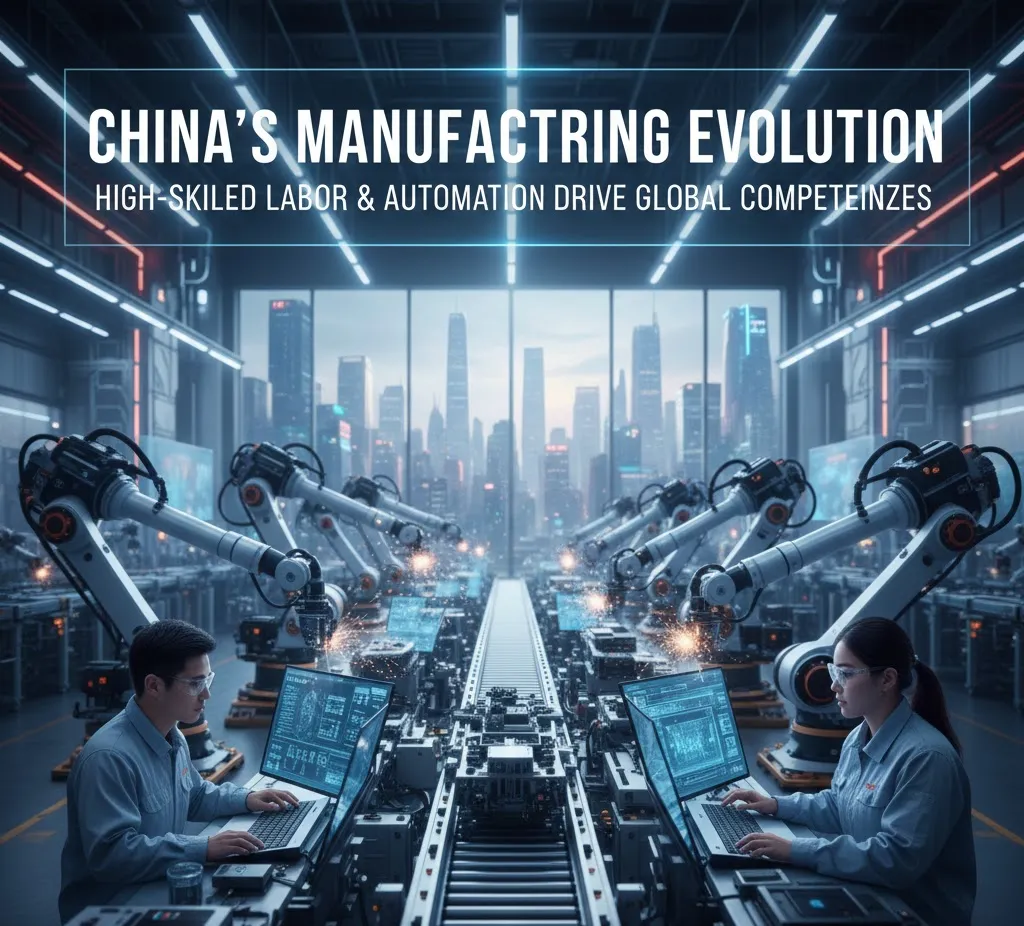
China’s rise as the world’s manufacturing powerhouse was long fueled by cheap labor, but rising wages over the past three decades—reaching around$8 per hour by 2022—have shifted the dynamics. Despite higher costs than competitors like Vietnam ($2.3), Malaysia ($2.1), Thailand ($1.9), and India ($1.1), China remains thelargest manufacturing hub, producing$4.66 trillion in goods in 2024, nearly28% of global output.
The reason is not cheap labor, butproductivity and scale. Chinese factories produce more per worker, maintain higher quality, and execute faster than low-cost alternatives. The country’send-to-end manufacturing ecosystem—comprising industrial clusters, supplier networks, logistics, skilled labor, and advanced technology—minimizes delays and costs, making relocation costly and complex for global firms.
China also benefits frombusiness-friendly reforms, advanced automation, digital infrastructure, and a massive domestic market, allowing firms to design, prototype, and mass-produce products rapidly. While challenges likeIP protection, rising wages, and regulatory hurdlesexist, the country’s productivity, speed, and integrated industrial system keep it at the center of global manufacturing.
In short, China’s dominance is no longer about cheap labor—it is aboutefficiency, scale, and an unrivaled industrial ecosystemthat other countries cannot easily replicate.

ଯଦି ଆପଣ ନୂଆ ପାସପୋର୍ଟ ପାଇଁ ଆବେଦନ କରିବାକୁ ଯାଉଛନ୍ତି,...
ଜାପାନରେ ଚାଲିଥିବା ୨୦୨୬ ଏସୀୟ କ୍ରୀଡ଼ାରେ ଆୟୋଜକଙ୍କ ଏକ ଭ...

ଜାପାନର ନାଗୋୟାରେ ଆୟୋଜିତ ୨୦୨୬ ଏସିଆନ୍ ଗେମ୍ସକୁ ନେଇ ରାଜ...

ନୂଆଦିଲ୍ଲୀ: ଭାରତର ସ୍ୱଦେଶୀ ଏରୋସ୍ପେସ୍ କ୍ଷେତ୍ରରେ ଆଉ ଏକ...

ୟୁକ୍ରେନ୍‌ରେ ଚାଲିଥିବା ଯୁଦ୍ଧ ଶେଷ ହେବା ପୂର୍ବରୁ ର...

ସେପ୍ଟେମ୍ବର ୧୫ରେ ଉତ୍ତର ଆରବ ସାଗରରେ ଭାରତ ଓ ପାକିସ୍ତାନର...

ଡେଙ୍ଗୁ ବିରୋଧରେ ଭାରତର ଟିକାକରଣ ପ୍ରୟାସରେ ଏକ ନୂଆ ଅଧ୍ୟା...
ଭାରତୀୟ କ୍ରିକେଟ୍‌ରେ ଅମ୍ପାୟାର ଓ ମ୍ୟାଚ୍ ରେଫରିଙ୍କ...
ଭାରତୀୟ କ୍ରିକେଟ୍‌ରେ ଏକ ଖେଳାଳିଙ୍କୁ ନେଇ ଦୁଇଟି ଦଳ...

ଦିଲ୍ଲୀ ବିଶ୍ୱବିଦ୍ୟାଳୟ ଛାତ୍ର ସଂଘ (DUSU) ନିର୍ବାଚନ ୨୦୨...
ନୂଆଦିଲ୍ଲୀ: ଭାରତୀୟ କ୍ରିକେଟ୍‌ରେ ଯୋଡ଼ି ହେବାକୁ ଯା...
