


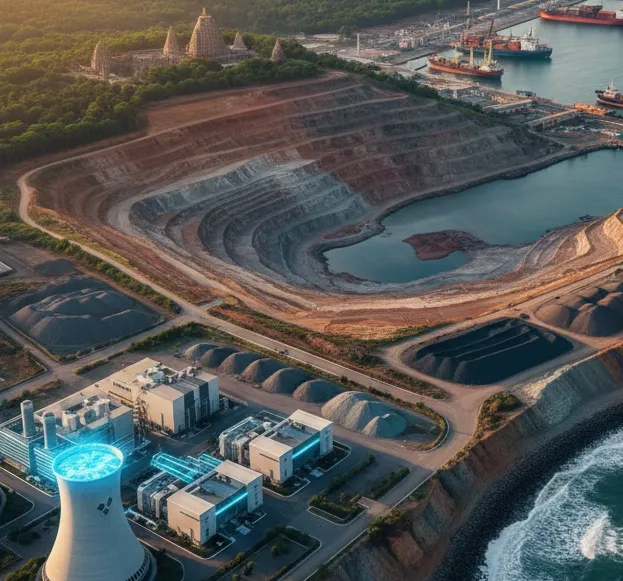
Odisha is increasingly positioning itself as a key player in the Centre’s Nuclear and Marine development roadmap, with major announcements in the Union Budget placing the state at the heart of India’s eastern coastal growth strategy. From the proposal of a Rare Earth Corridor to deep-sea fishing reforms and biotechnology expansion, the policy direction signals a structural shift in how Odisha’s coastal and mineral resources could be harnessed.
These developments were discussed during a recent meeting between Union Minister of State for Science and Technology and Earth Sciences, Dr. Jitendra Singh, and Odisha’s Science and Technology Minister, Krushna Chandra Patra.
Rare Earth Corridor: Strategic and Economic Significance
One of the most significant announcements for Odisha is its inclusion in one of the four Rare Earth Corridors proposed across the country. Rare earth elements are critical for high-technology manufacturing, including electronics, renewable energy systems, electric vehicles, defence equipment and advanced communication systems.
India currently relies heavily on imports for several rare earth minerals. By positioning Odisha within a Rare Earth Corridor, the Centre is signalling a push to expand mineral exploration beyond traditionally dominant southern states. For Odisha, which already has a strong mining ecosystem, this could lead to increased exploration and extraction activities, investment in mineral processing infrastructure, development of downstream manufacturing industries and employment generation in high-value sectors.
Strategically, the move strengthens India’s push for mineral self-reliance, with Odisha potentially emerging as a critical node in the national supply chain.
Deep-Sea Fishing: A Game-Changer for Coastal Communities
Another major focus of the Centre’s roadmap is enabling policy support for deep-sea fishing within India’s Exclusive Economic Zone (EEZ). For Odisha, which has a long coastline and a substantial fishing population, this reform could significantly reshape the coastal economy.
Deep-sea fishing allows access to high-value marine species beyond traditional near-shore zones, potentially increasing fishermen’s incomes and reducing pressure on coastal fisheries. If implemented effectively, the initiative could result in diversification of marine catch, increased export potential, modernisation of fishing fleets and strengthened marine infrastructure.
The move aligns with the broader Deep Ocean Mission, under which India is systematically mapping and exploring ocean resources through coordinated efforts between the Centre and state governments.

ଭୁବନେଶ୍ୱର:ବିଜୁ ଜନତା ଦଳ (ବିଜେଡି) ନିଜ ସଂଗଠନକୁ ଆହୁରି...

ନୂଆଦିଲ୍ଲୀ:ଜନଗଣନା ୨୦୨୭ ପାଇଁ କେନ୍ଦ୍ର ସରକାର ପ୍ରଶ୍ନପତ୍...

ବଲିଉଡ୍ ଅଭିନେତା ଗୋବିନ୍ଦା ଓ ତାଙ୍କ ପତ୍ନୀ ସୁନୀତା ଆହୁଜା...

ବଲିଉଡ୍‌ ଅଭିନେତା ଅକ୍ଷୟ ଖନ୍ନା ଏବେ ଏକ ନିଆରା ଅବତା...

ନୂଆଦିଲ୍ଲୀ: କେନ୍ଦ୍ରୀୟ ମନ୍ତ୍ରିମଣ୍ଡଳର ସମ୍ଭାବ୍ୟ ସମ୍ପ୍ର...

‘୧୦୦%’ ଦାବିକୁ ନେଇ ITC Limited ଏବଂ ଭାରତ...

HBOର ବହୁ ପ୍ରତୀକ୍ଷିତ ‘Harry Potter’ ଟିଭ...

MMDR ବିଲ୍‌-୨୦୨୬କୁ ନେଇ ଓଡ଼ିଶାରେ ରାଜନୈତିକ ତାତି...

ଆମେରିକା ଓ କାନାଡା ମଧ୍ୟରେ ବାଣିଜ୍ୟ ଚୁକ୍ତି ହେବା ନେଇ ଆଶ...

ମୁମ୍ବାଇ:ବଲିଉଡ୍ର ଚର୍ଚ୍ଚିତ ଫ୍ରାଞ୍ଚାଇଜ୍ **‘ବ୍ରହ...

ଆଲାର୍ମ ବାଜିବା ପୂର୍ବରୁ ସ୍ୱାଭାବିକ ଭାବେ ଉଠିବା ଅନେକଙ୍କ...

ଭାରତରେ ଚିପ୍ସ, ମିଠା ପାନୀୟ ଓ ଅନ୍ୟାନ୍ୟ ପ୍ୟାକେଜ୍ଡ ଖାଦ୍...