










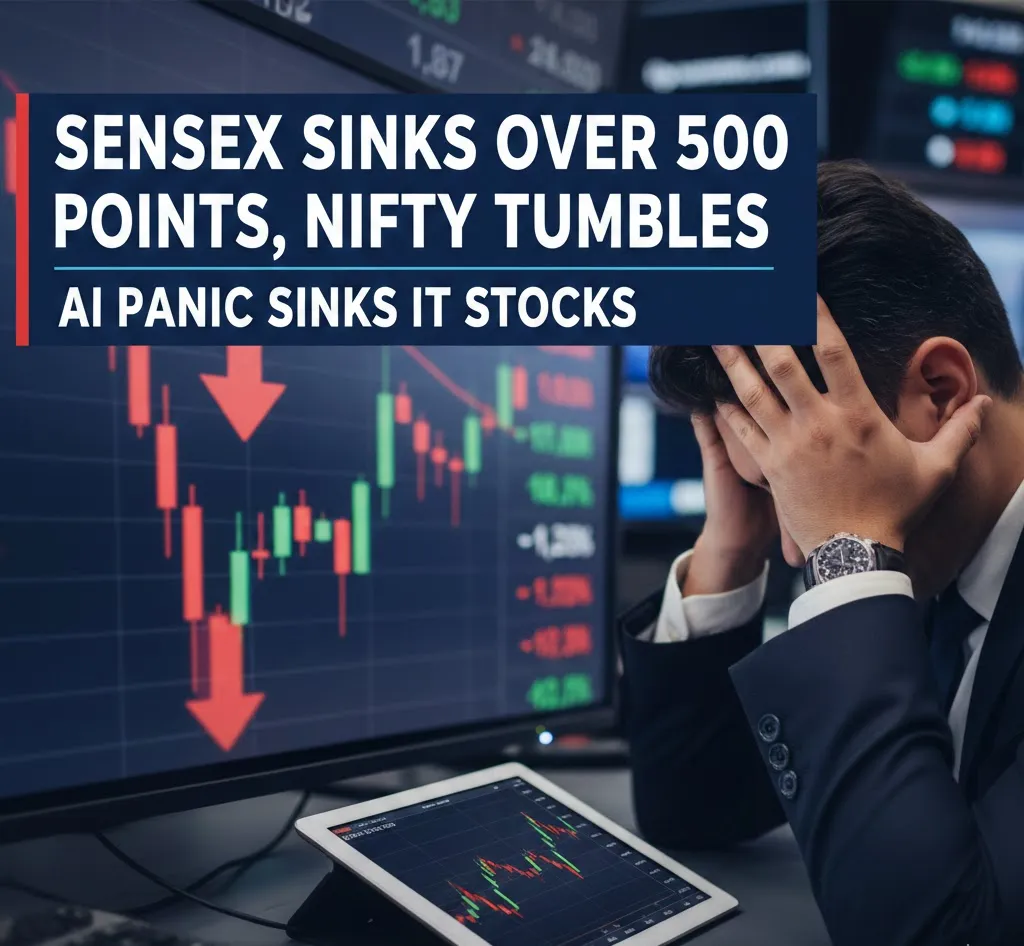
Indian benchmark indices closed significantly lower on Thursday, weighed down by intense selling pressure in information technology (IT) stocks. The BSE Sensex declined 559 points to settle at 85,674.92, while the Nifty50 slipped below the key psychological level of 25,900, reflecting growing investor caution.
The IT sector emerged as the biggest drag on the market. Heavyweights including Infosys, TCS, HCLTech, and Wipro witnessed sustained selling throughout the session. The Nifty IT index ranked among the worst-performing sectoral indices, mirroring weakness in global technology stocks, particularly in the United States.
The sell-off comes amid mounting concerns that elevated valuations in AI-driven companies may not justify near-term earnings growth. Investors are increasingly reassessing expectations around artificial intelligence, especially as aggressive AI investments may not immediately translate into visible revenue gains. Additionally, stronger-than-expected US jobs data has lowered the probability of an imminent Federal Reserve rate cut, further pressuring sentiment in growth-oriented technology stocks.
According to market experts, AI-led disruption is not only impacting global markets but also structurally reshaping India’s IT services industry. Automation and accelerated delivery models are challenging the traditional headcount-driven outsourcing model, potentially compressing margins in service-intensive sectors.
Beyond IT, financial and select auto stocks also ended in the red, though losses were relatively moderate. Broader market sentiment remained negative, with midcap and smallcap indices closing lower, indicating widespread risk aversion.
Global cues offered limited support, as overnight losses on Wall Street — particularly in AI-linked stocks — reinforced fears that the AI rally may be entering a recalibration phase. Geopolitical tensions between the US and Iran further contributed to investor caution.
Technically, the 25,900 level on the Nifty will be closely monitored. A sustained break below this mark could trigger additional selling pressure, while any improvement in global tech sentiment may provide short-term relief.
For retail investors, the current phase underscores the importance of discipline and long-term focus, rather than reacting impulsively to short-term volatility.
ତାମିଲନାଡୁ ରାଜନୀତିରେ ମୁଖ୍ୟମନ୍ତ୍ରୀ ସି. ଜୋସେଫ୍ ବିଜୟଙ୍...
କେରଳ ବିଶ୍ୱବିଦ୍ୟାଳୟରେ ଛାତ୍ର ରାଜନୀତିକୁ ବନ୍ଦ କରିବା ନେ...

ନୂଆଦିଲ୍ଲୀ: ଆମେରିକାରେ Metaର ଦୁଇ ଲୋକପ୍ରିୟ ସୋସିଆଲ ମିଡ...
ବୟସ ବଢ଼ିବା ସହ ଅନେକ ଲୋକଙ୍କଠାରେ ମଝିରେ ମଝିରେ ଜିନିଷ ଭୁ...

ଇଟାଲୀରେ ସ୍କୁଲ ଶିକ୍ଷା ବ୍ୟବସ୍ଥାକୁ ନେଇ ନୂଆ ନିୟମ ଆଣିବା...
HIV ପ୍ରତିରୋଧ କ୍ଷେତ୍ରରେ ଏକ ନୂଆ ଔଷଧ ନେଇ ଆଶା ସୃଷ୍ଟି ହ...

ଜର୍ମାନୀର ଚାନ୍ସେଲର ଫ୍ରିଡ୍ରିକ୍ ମେର୍ଜଙ୍କ ଉପରେ ପୁଣିଥରେ...
ଉତ୍ତରପ୍ରଦେଶକୁ ବିଭାଜନ କରିବା ନେଇ ପୁଣିଥରେ ରାଜନୈତିକ ଚର...
ଆଜିକାଲି କାମ, ମୋବାଇଲ୍, ସୋସିଆଲ୍ ମିଡିଆ କିମ୍ବା ଦେରିରାତ...

ଚୀନ୍ ରାଷ୍ଟ୍ରପତି ସି ଜିନପିଙ୍ଗଙ୍କ ଆମେରିକା ଗସ୍ତ ନେଇ ଅଧ...
ଲକ୍ଷ୍ନୌ: ଉତ୍ତରପ୍ରଦେଶରେ ଆମ୍ବେଦକରଙ୍କ ପ୍ରତିମୂର୍ତ୍ତି ଭ...
ମେନୋପଜ୍କୁ ସାଧାରଣତଃ ଲଗାତାର ୧୨ ମାସ ଧରି ମାସିକ ଋତୁସ୍ରା...