





Much like a cricket match that turns in the final overs, India’s trade diplomacy has witnessed a sharp reversal in fortunes over the past few weeks. After facing criticism for allegedly missing out on a trade deal with the United States, New Delhi has suddenly emerged with a series of high-profile free trade agreements, reshaping perceptions around its negotiating strategy.
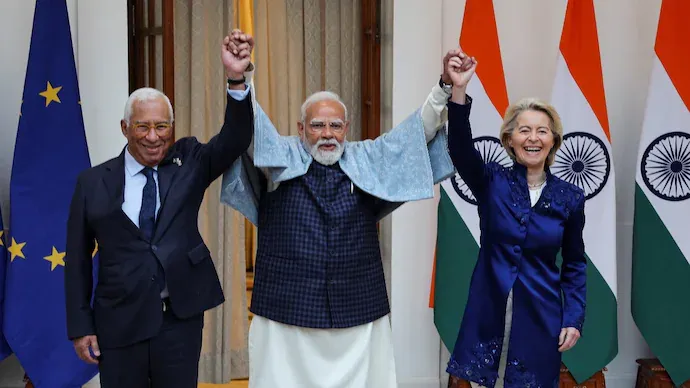
On Tuesday, India and the European Union announced the conclusion of negotiations on a long-pending Free Trade Agreement (FTA), marking one of the biggest trade deals ever signed by either side. The agreement follows closely on the heels of FTAs with New Zealand, the UK and Oman, signalling a surge in India’s global trade engagements.
The upbeat mood contrasts sharply with comments made earlier by US Commerce Secretary Howard Lutnick, who faulted India for not finalising a deal with the US despite being given multiple opportunities. His remarks triggered political criticism at home, with the Congress party mocking the Modi government’s handling of the negotiations.
However, the EU-India FTA—hailed by European Commission President Ursula von der Leyen as the “Mother of All Deals”—has significantly altered the narrative. The agreement creates a free trade zone encompassing nearly two billion people and represents about 25% of global GDP and one-third of international trade.
While some analysts credit former US President Donald Trump’s aggressive tariff policies for nudging India and Europe closer, India’s Commerce and Industry Minister Piyush Goyal rejected that view, reiterating that India does not negotiate trade deals under pressure. He emphasised that New Delhi prioritises protecting domestic sectors such as agriculture and dairy, even if negotiations take longer.
India’s recent trade strategy reflects this approach. The UK deal took over three years, the EU agreement nearly two decades since initial talks, while the revived India–New Zealand negotiations were completed in record time due to mutual flexibility. Together, these deals have given India stronger leverage in ongoing talks with the US and reduced its dependence on any single major economy.
As global trade dynamics shift, experts believe India has successfully used diplomacy, patience and timing to regain momentum—proving once again that, like cricket, the game isn’t over until the final ball is bowled.

ଓଡ଼ିଶାର ବିଭିନ୍ନ ଅଞ୍ଚଳରୁ ନାବାଳିକାଙ୍କୁ ନେଇ ୩ଟି ଦୁଷ୍କ...
‘ବିଗ୍ ବସ୍ ୨୦’ର ଗ୍ରାଣ୍ଡ ପ୍ରିମିୟର ଶୁଟିଂ...

ମେଷ ଏହି ସପ୍ତାହରେ କାର୍ଯ୍ୟକ୍ଷେତ୍ରରେ ନୂଆ ସୁଯୋଗ ମିଳ...
ରକିଂ ଷ୍ଟାର୍ ୟଶଙ୍କ ଅଭିନୀତ‘Toxic: A Fairy Tale...

ବାଲେଶ୍ୱରରେ ସାମାନ୍ୟ କଥାକୁ ନେଇ ହୋଇଥିବା ବିବାଦ ଶେଷରେ ମ...

ଓଡ଼ିଶାରେ ମନ୍ଦିରଗୁଡ଼ିକୁ ଟାର୍ଗେଟ୍ କରି ଚୋରି ଘଟଣା ଥମିବ...
ପ୍ୟାରିସରେପ୍ରିୟଙ୍କା ଚୋପ୍ରା ଓ ଜେନିଫର ଲରେନ୍ସଙ୍କ ଏକ ମଜ...
ଭାରତୀୟ ସିନେମାରେ ମହିଳାଙ୍କୁ କିପରି ଉପସ୍ଥାପନ କରାଯାଉଛି,...