






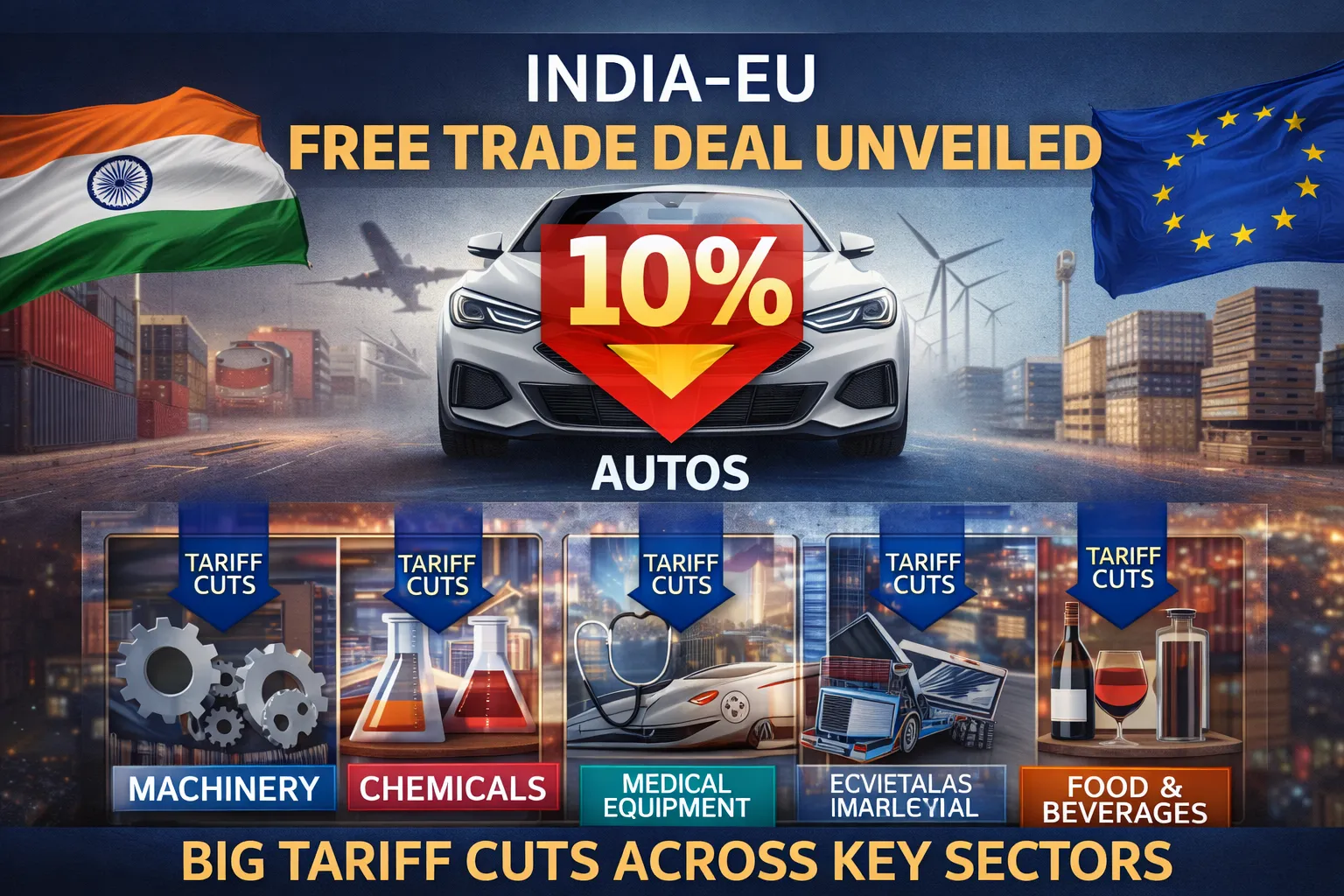
India and the European Union have published the first comprehensive breakdown of their long-awaited free trade agreement, outlining some of the most extensive tariff reductions India has ever offered to a trading partner. The data shows that the agreement will dramatically lower duties across a wide range of European exports, with changes set to roll out over the next ten years.
The biggest impact will be in the automobile sector. India will gradually reduce tariffs on European cars to 10%, down from an effective duty burden that currently touches nearly 70%. A quota of 2.5 lakh vehicles per year will apply during the transition period. According to the European Union, this single provision could significantly reshape India’s premium and luxury car market.
Beyond autos, tariffs on over 90% of European goods entering India will either be eliminated or sharply reduced. The EU estimates that the deal could double its exports to India by 2032 and save European companies up to €4 billion annually in duties. Machinery, which currently faces tariffs as high as 44%, along with chemicals, pharmaceuticals and medical equipment, will see most duties phased out. Aircraft and spacecraft imports will enjoy near-complete tariff elimination, while optical, medical and surgical equipment will see duties removed on around 90% of product lines.
Food and beverage imports will also see a major reset. India has agreed to cut tariffs on European wine to 20–30%, spirits to 40% and beer to 50%. Duties on olive oil, margarine and other vegetable oils from the EU will be reduced or removed entirely. Medical equipment stands out as another major beneficiary, with tariffs moving towards zero across nearly all items, potentially lowering healthcare and diagnostic costs in India.
On the services front, the EU has secured enhanced market access in financial and maritime services, an area where India has traditionally taken a cautious approach. Brussels has described this as a significant breakthrough in services trade.
The agreement also includes a climate component, with the EU committing €500 million over the next two years to support India’s efforts to reduce greenhouse gas emissions and accelerate climate-friendly investments.
In return, the European Union will reduce import duties on 99.5% of goods traded with India over a seven-year period. This includes eliminating tariffs on Indian exports such as marine products, textiles, leather, chemicals, rubber goods, base metals and gems and jewellery, according to India’s trade ministry.
While the EU sees the deal as a major step in deepening its presence in one of the world’s fastest-growing consumer markets, the focus in India will now turn to how domestic industries—particularly autos, machinery, chemicals and medical devices—adapt to increased competition from European players
Bigg Boss 20ର ପ୍ରୋମୋକୁ ନେଇ ଅଭିନେତା ସଲମାନ ଖାନ୍&zwnj...

ଓଡ଼ିଶାର ପାଣିପାଗକୁ ନେଇ ପୁଣି ବଢ଼ିଛି ଚିନ୍ତା। ଉତ୍ତର ଆଣ...

ଅଗଷ୍ଟ ୨୬ରେ ନେପାଳ-ଚୀନ୍ ସୀମା ନିକଟ ହିମାଳୟ ଅଞ୍ଚଳରେ ଘଟି...

ଭୁବନେଶ୍ୱର: ବଙ୍ଗୋପସାଗରରେ ପାଣିପାଗକୁ ନେଇ ପୁଣି ବଢ଼ିଛି...

ଭାରତ ଏଥର ଦୀର୍ଘ ସମୟ ପରେ ଏକ ଦୁର୍ବଳ ମୌସୁମୀ ଋତୁର ସାମ୍ନ...

ସେପ୍ଟେମ୍ବର ୧୫ରେ ଉତ୍ତର ଆରବ ସାଗରରେ ଭାରତ ଓ ପାକିସ୍ତାନର...
ମୁମ୍ବାଇ: ସେଲିବ୍ରିଟିଙ୍କ ଶରୀର, ବୟସ, ଚେହେରା ଓ ବ୍ୟକ୍ତି...
ବଲିଉଡ୍‌ର ଲୋକପ୍ରିୟ କମେଡି ଫ୍ରାଞ୍ଚାଇଜ୍ ‘Go...

ୟୁକ୍ରେନ୍‌ରେ ଚାଲିଥିବା ଯୁଦ୍ଧ ଶେଷ ହେବା ପୂର୍ବରୁ ର...

ଆଣ୍ଡାମାନ ସାଗରରେ ନୂଆ ପାଣିପାଗ ପ୍ରଣାଳୀ ଗଠନକୁ ନେଇ ଓଡ଼ି...
ସାଉଥ୍‌ ସିନେମାର ଚର୍ଚ୍ଚିତ ଅଭିନେତା ଅଲ୍ଲୁ ଅର୍ଜୁନଙ...

ଜାପାନର ନାଗୋୟାରେ ଆୟୋଜିତ ୨୦୨୬ ଏସିଆନ୍ ଗେମ୍ସକୁ ନେଇ ରାଜ...