

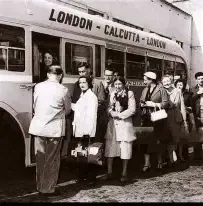
Long before YouTubers drove 4x4s across continents or bikers livestreamed epic road trips, there was a quieter, slower adventure on wheels—one that sounds almost unbelievable today. In the 1960s and 70s, when travel was neither instant nor digital, a single bus linked two worlds: London and Calcutta.
The London–Calcutta–London coach route operated for nearly 21 years, carrying passengers across continents on a 110-day journey that was part nostalgia, part legend. The bus, affectionately namedAlbert, offered ordinary travelers an extraordinary experience, traversing borders and landscapes that felt like exploration. Travel in the 1950s and 60s moved at a different pace: a four-month journey wasn’t a break from work; it was part of life. Covering more than 20,000 kilometres by bus might seem absurd today, but back then, it was marketed as a comfortable—even luxurious—way to see the world.
The first trip departed in 1957 from London’s Victoria Coach Station. A black-and-white photograph often shared online captures passengers waiting beside a tall double-decker, unaware they were embarking on a journey that would etch itself into history.
The bus traveled from London through Belgium, West Germany, Austria, Yugoslavia, Bulgaria, Turkey, Iran, Afghanistan, Pakistan, and India, passing through Delhi, Agra, Allahabad, Banaras, and finally reaching Calcutta. A one-way ticket cost £85, with the return fare at £65—roughly £7,900 and £6,000 today—covering travel, meals, and lodging. The India leg alone took five days, one of the shortest stretches of the entire journey.
Albertwas more than a bus. Its lower deck featured a reading and dining lounge, while the upper deck offered a forward observation room. A fully equipped kitchen served fresh meals, music played on the radio, and onboard parties brought travelers together. Stops included guided sightseeing: the Taj Mahal, the Peacock Throne, Rajpath, and the ghats of Banaras. In Afghanistan, passengers observed tribesmen in traditional dress; in Turkey, they sailed the Golden Horn; in Bulgaria, they glimpsed life under Communist rule. The route also touched the Caspian Sea, the Blue Danube, and the Rhine Valley.
When the bus was damaged in 1968, British traveler Andy Stewart bought it to find his way back to London, adding another chapter toAlbert’s story.
The London–Calcutta bus ran for over two decades, carrying passengers whose stories now survive in photos, ticket stubs, and newspaper clippings. Today, geopolitical tensions, visa rules, and security concerns make such a journey impossible. Yet the memory ofAlbert, the world’s longest bus route, lives on as a reminder of an era when travel demanded patience, curiosity, and trust in the road—long before algorithms, screens, or fixed itineraries shaped our journeys.

ଶ୍ୟାମପୁରର ଦୁର୍ଗାପୂଜା କାହିଁକି ନିଆରା? ଦୁର୍ଗାପୂଜା...

‘Roadies Rebirth’ ପୁଣି ଫେରିଛି, ଏଥର ଏକ...

ଅକ୍ଟୋବର ୧୯ରୁ ୨୫ ମଧ୍ୟରେ ବିଭିନ୍ନ OTT ପ୍ଲାଟଫର୍ମରେ ଦର୍...

ରିଲ୍ସରେ ବ୍ୟସ୍ତ ବାପା-ମା’, ଲହଡ଼ି ନିକଟରେ ଛୁଆ...

OTT ଦୁନିଆରେ ମାଲୟାଲମ୍‌ର ନୂଆ ୱେବ୍ ସିରିଜ୍ &lsquo...

ପାରମ୍ପରିକ ରୀତିନୀତିରେ ଆରମ୍ଭ ହେବ ଯାତ୍ରା ପଟଖଣ୍ଡା ଯ...

ମୁମ୍ବାଇରେ ଚାଲିଥିବା ଦୁର୍ଗାପୂଜା ଉତ୍ସବରେ ବଲିଉଡ୍ ଅଭିନେ...

ଆନ୍ଧ୍ରର ନିର୍ବାଚନ ଘୋଷଣା ପରେ ପୁଣି ଚର୍ଚ୍ଚାରେ କୋଟିଆ...