





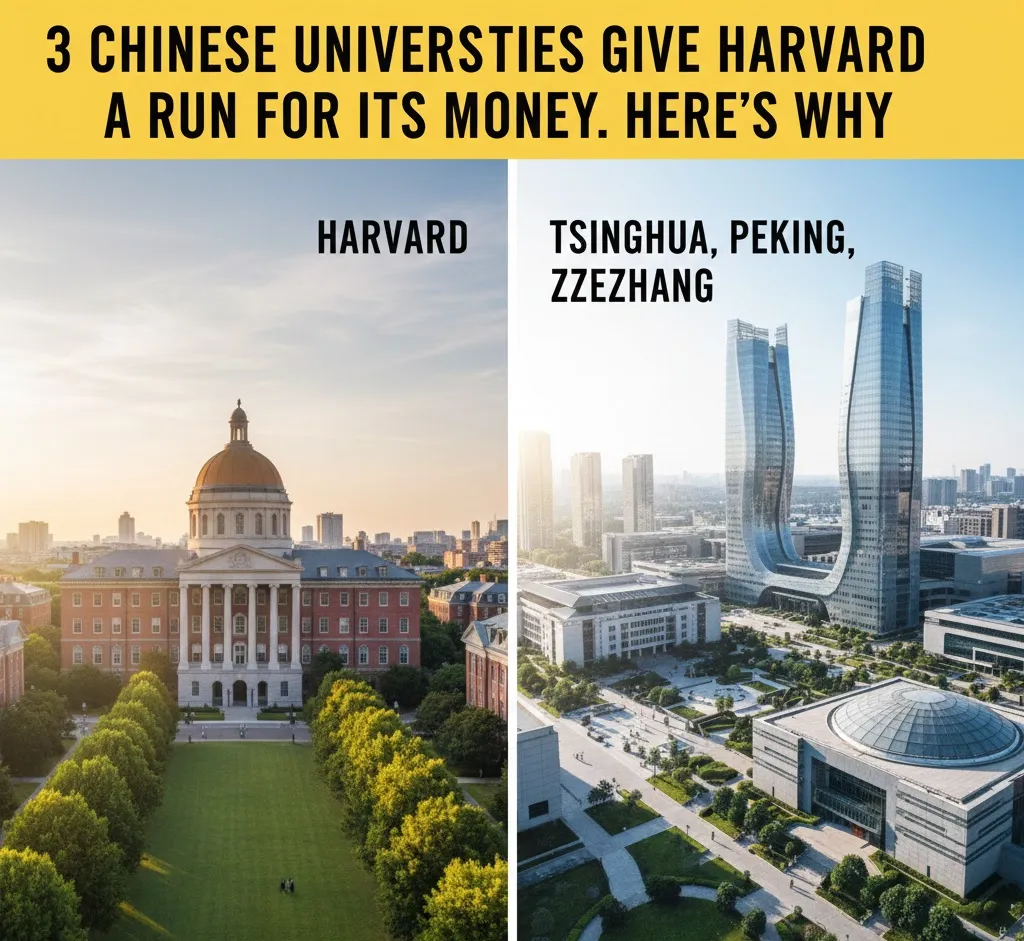
Global university rankings are witnessing a quiet yet significant shift. As Chinese institutions surge in research-focused metrics, long-dominant US universities like Harvard are facing increasing competition.
For decades, Harvard University symbolized the gold standard of higher education, evoking excellence in research, teaching, and intellectual leadership. However, recent rankings suggest a consequential change: Chinese universities are emerging as major players in research output, surpassing Harvard on key academic measures. This transformation is driven not by reputation alone, but by sustained investment, policy focus, and data-backed results.
According to recent global university rankings highlighted by The New York Times, Harvard has slipped to around No. 30 globally in certain research-driven indices. In contrast, Chinese institutions—particularly Zhejiang University, Tsinghua University, and Peking University—have surged to the top. These rankings emphasize peer-reviewed research, citations, and scientific productivity, areas where Chinese universities have grown rapidly over the past two decades.
The rise of Chinese universities is the result of a deliberate, long-term strategy. China has invested billions of dollars into higher education and scientific research, encouraging universities to produce high-impact publications, particularly in STEM fields such as artificial intelligence, renewable energy, engineering, materials science, and medicine. Faculty promotions, funding, and institutional prestige are closely linked to research output, leading to a dramatic increase in international publications and citations—directly boosting global rankings.
Experts emphasize that Harvard has not weakened. Its research quality, innovation, and teaching excellence remain high. However, rankings reward scale and growth, and Chinese universities have expanded research output at an unprecedented pace—sometimes producing two to three times more scientific papers annually than comparable US institutions. In volume- and citation-focused rankings, this difference is decisive.
Broader challenges also affect American universities. Uncertain federal research funding, stricter immigration policies, and limitations on international collaboration have slowed growth. Research ecosystems thrive on stability and openness; when these conditions are constrained, output growth plateaus—something increasingly reflected in rankings.
The rise of Chinese universities signals a shift in global academic power. Elite education and world-class research opportunities are no longer concentrated in the US alone. For students, this expands global options for higher education and research. For policymakers, it underscores how sustained investment and clear national priorities can reshape global influence in academia.
While Harvard continues to dominate reputation-based rankings, China’s universities are setting the pace in research metrics, a trend likely to shape the future of global higher education for years to come.

ଭାରତୀୟ digital trust ଓ cybersecurity କମ୍ପାନୀeMudhr...
ଥାଇଲାଣ୍ଡ-ମିଆଁମାର ଅଞ୍ଚଳରେ ଘୂର୍ଣ୍ଣିବଳୟ IMDର ସଦ୍ୟତ...
ବଙ୍ଗୋପସାଗରରେ ସମ୍ଭାବ୍ୟ ବାତ୍ୟାକୁ ନେଇ ସୋସିଆଲ ମିଡିଆ ଓ...

Jio Platformsର ବହୁଚର୍ଚ୍ଚିତ IPO ଅକ୍ଟୋବର ୨୨ରେ ଦ୍ୱିତୀ...

ଅକ୍ଟୋବର ୨୧, ବୁଧବାର ଦେଶର ରାଜନୀତି, ନ୍ୟାୟ ବ୍ୟବସ୍ଥା ଓ...

ଉତ୍ତରପ୍ରଦେଶରେ ୨୦୨୭ ବିଧାନସଭା ନିର୍ବାଚନକୁ ନେଇ ରାଜନୈତି...

କଂଗ୍ରେସ ସାଂସଦ ଶଶୀ ଥରୁର ବୁଧବାର ତିରୁବନନ୍ତପୁରମରେ ସାମ୍...
୨୩ ଅକ୍ଟୋବରରେ ଲଘୁଚାପ ସୃଷ୍ଟି ସମ୍ଭାବନା ଭାରତୀୟ ପାଣି...