






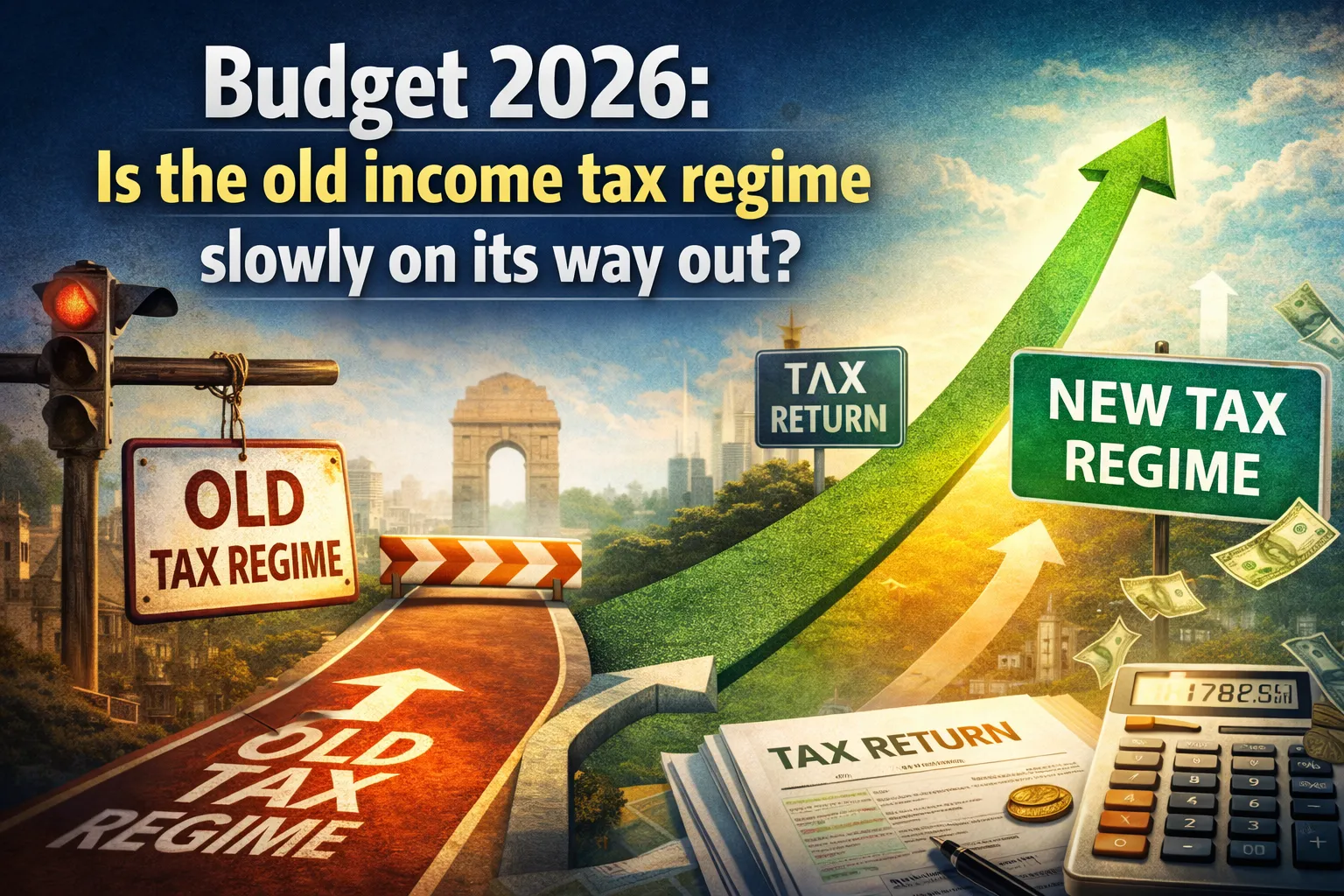
As the Union Budget 2026 approaches with a continued emphasis on tax simplification, taxpayers are increasingly questioning whether the old income tax regime is slowly being phased out. While the government has not announced any abrupt changes, recent policy trends point to a steady shift in favour of the new tax regime.
Over the past few years, the focus has moved towards fewer exemptions and simpler compliance, making the new regime more attractive for a large section of taxpayers.
The new income tax regime was introduced to reduce complexity by eliminating multiple exemptions and deductions that often required extensive documentation and planning. This approach aligns closely with the government’s broader objective of simplifying the tax system.
Riaz Thingna, Partner at Grant Thornton Bharat, says future policy changes are likely to strengthen the new regime rather than replace it. “The new regime under the Income-tax Act is closely aligned with the government’s focus on simplification by doing away with numerous deductions and exemptions,” he says. Any amendments, he adds, are expected to remain within the framework of the new regime to encourage wider adoption.
Despite the growing preference for the new system, experts believe the old tax regime will not be discontinued immediately. Certain exemptions and carried-forward losses are still available only under the old structure.
“Despite the push towards the new regime, the old regime is not expected to be scrapped in the near future,” Thingna notes. He explains that taxpayers who continue to benefit from the old system—especially those with carried-forward losses or specific deductions—will be allowed to remain under it until those benefits are gradually phased out.
Atul Puri, Managing Partner and Co-Founder of SW India, believes the direction of policy is already evident. “Budget 2026 signals that the old income tax regime is on a slow exit,” he says.
According to Puri, the government has steadily reduced exemptions and deductions, making tax compliance easier for most individuals. This shift is already reflected in taxpayer behaviour.
Puri points out that nearly 72% of taxpayers have opted for the new tax regime in recent years, indicating growing acceptance of the simplified structure.
“With standard deductions now available under both regimes, fewer exemptions, simpler rules and improved take-home pay for many salaried individuals, the new regime is increasingly becoming the preferred choice,” he says. Over time, the ease of filing and transparency offered by the new system are likely to outweigh the benefits of complex tax planning under the old regime.
For now, the government appears to be encouraging voluntary migration to the new tax framework rather than enforcing a mandatory switch. Experts advise taxpayers to assess their income, deductions and long-term financial plans carefully. While the old regime may still be beneficial for some, particularly those with significant deductions, the long-term policy direction clearly favours simplicity.
In short, while the shift towards the new tax regime is gaining pace, the old regime is expected to continue for some time to accommodate taxpayers with specific needs. The transition is likely to be gradual, with the ultimate goal of creating a more transparent and simplified tax system.
ହାଇୱେ କଡ଼ରୁ ଜଣେ ଅଜଣା ବ୍ୟକ୍ତିଙ୍କ ମୃତଦେହ ମିଳିବା ପରେ...
ଭଦ୍ରକ ଜିଲ୍ଲା ଚାନ୍ଦବାଲି ଥାନା ଅଧୀନ ପାଇକିରାପୁର ଗାଁରେ...
ନିଜକୁ IAS ଅଧିକାରୀ ପରିଚୟ ଦେଇ ଲୋକଙ୍କୁ ଠକୁଥିବା ଅଭିଯୋଗ...

ଡେଙ୍ଗୁ ବିରୋଧରେ ଭାରତର ଟିକାକରଣ ପ୍ରୟାସରେ ଏକ ନୂଆ ଅଧ୍ୟା...

ଭାରତର ଖାଦ୍ୟ ନିୟାମକFood Safety and Standards Author...

ଭାରତରେBreast Cancer ବା ସ୍ତନ କର୍କଟଏକ ଗୁରୁତର ସ୍ୱାସ୍ଥ...
କେନ୍ଦ୍ରାପଡ଼ା ଜିଲ୍ଲା କୋରୁଆ ବଜାରରେ ଅବସରପ୍ରାପ୍ତ ଜଣେ ବ...

ଭାରତରେ ଡେଙ୍ଗୁ ବିରୋଧରେ ଲଢ଼େଇକୁ ଆହୁରି ମଜବୁତ କରିବା ପା...

ନୂଆ ସପ୍ତାହ ଆରମ୍ଭ ହେବା ସହ ଗ୍ରହ ଓ ନକ୍ଷତ୍ରଙ୍କ ଗତିରେ ମ...