

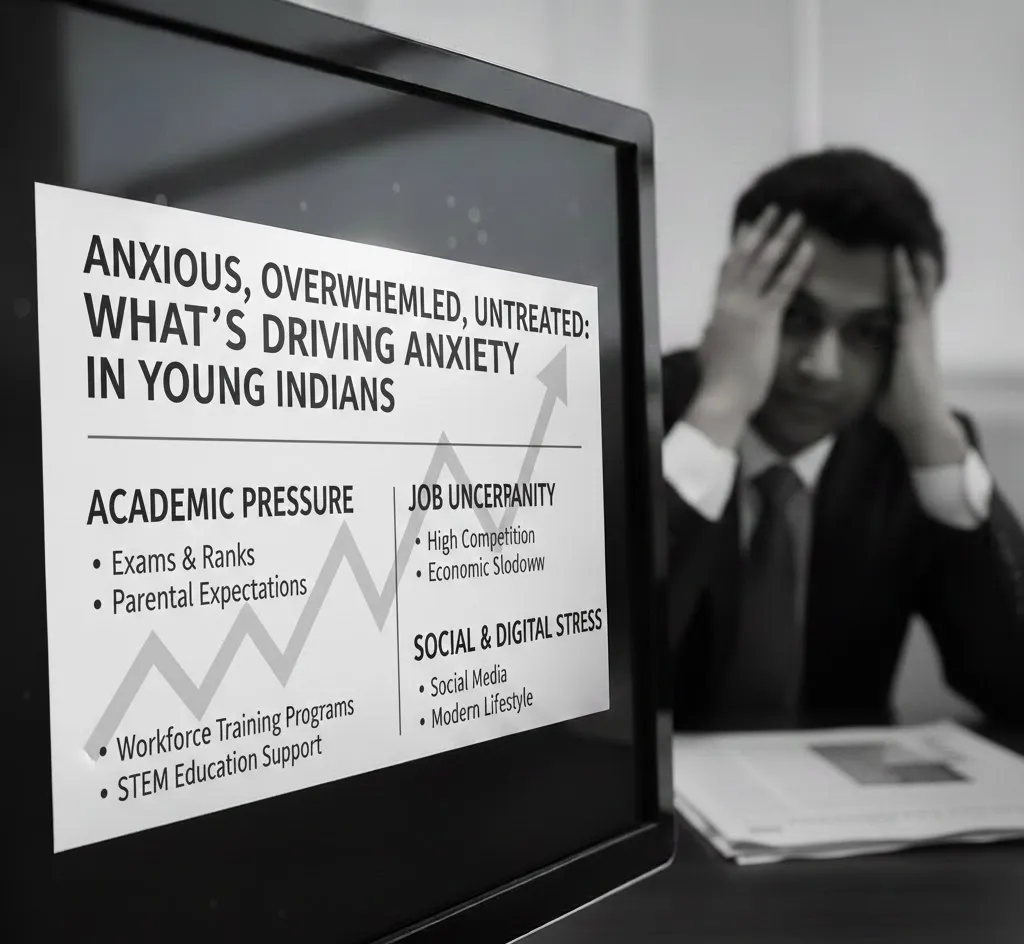
Anxiety has become a recurring theme in conversations about young Indians today. It surfaces in college corridors, office break rooms, and therapy clinics alike. Parents worry their children are “too anxious,” while young adults question whether what they feel is normal stress or something more serious. Doctors, meanwhile, report a steady rise in people seeking help, often saying they feel unable to cope.
But is anxiety truly increasing among young Indians? The National Mental Health Survey (NMHS) 2016 found that 2.57% of Indian adults lived with anxiety disorders, though experts believe this figure significantly underestimates the real burden due to underdiagnosis and lack of treatment. Since then, no large government-backed study has updated these numbers. Globally, the trend is clearer: the World Health Organization estimates that around 280 million people live with anxiety disorders, with a 25% rise reported in the post-Covid period. India, with its young population and rapid social change, is very much part of this global shift.
Stress versus anxiety disorders
Mental health experts stress the importance of distinguishing everyday stress from clinical anxiety disorders. Dr Samir Parikh, Chairperson of the Fortis Mental Health Program & Adayu, explains that anxiety disorders are medical conditions with well-defined diagnostic criteria and evidence-based treatments. While stress is usually situational and temporary, anxiety disorders such as generalised anxiety disorder, panic disorder, or social phobia can persist and significantly disrupt daily life.
Why more young people are seeking diagnosis
Greater awareness has led more young people to recognise symptoms and seek help. Conversations around mental health are no longer confined to whispers. However, stigma remains a powerful barrier. Dr Parikh notes that even today, the number of people who seek treatment is far lower than those who need it, with hesitation and fear of judgement still preventing timely care.
The post-pandemic pressure cooker
The pandemic has intensified existing pressures. Disrupted education, uncertain careers, social isolation, and constant comparison on social media have pushed many young people from manageable stress into clinical anxiety. For many, uncertainty has become a constant rather than a phase.
Medication concerns and misconceptions
As more young people seek treatment, concerns about medication often arise. Parents worry about dependence, while young adults fear long-term reliance. Dr Girishchandra B G, Medical Director and Senior Psychiatrist at Maarga Mind Care, explains that most medications used to treat anxiety do not cause dependence when prescribed appropriately. Long-term treatment typically relies on safer medications alongside therapy, with close monitoring and gradual adjustments over time.
How psychiatrists reduce long-term risks
Modern psychiatric care emphasises caution, especially for young patients. Treatment plans are tailored based on severity, combining therapy, lifestyle changes, and medication when needed. Safeguards such as evidence-based guidelines, professional training, and regular reviews are central to responsible care. Importantly, psychiatrists encourage patients and families to ask questions and remain actively involved in treatment decisions.
The rise in anxiety among young Indians is not simply a story of overdiagnosis or overmedication. It reflects a complex mix of genuine increase, improved recognition, persistent stigma, and unprecedented social pressures. The challenge now is not only to treat anxiety, but to understand it with care, clarity, and compassion—without fear or judgement.

ହସ୍ପିଟାଲଗୁଡ଼ିକରେ ଥରେ ବ୍ୟବହାର ପାଇଁ ଉଦ୍ଦିଷ୍ଟ ମେଡିକାଲ...

ଶୁକ୍ର ବକ୍ରୀକୁ ନେଇ କ’ଣ କୁହୁଛି ଜ୍ୟୋତିଷ? ଜ୍ୟ...
MIT ଓ IITକୁ ନେଇ ଏକ ଚର୍ଚ୍ଚା ପୁଣି ସାମ୍ନାକୁ ଆସିଛି&mda...

CAT 2026 ପାଇଁ ପ୍ରସ୍ତୁତି ନେଉଥିବା MBA ଆଶାୟୀଙ୍କ ପାଇଁ...

ପଶ୍ଚିମ ଓଡ଼ିଶାର ପ୍ରମୁଖ ଚିକିତ୍ସା ପ୍ରତିଷ୍ଠାନ ବୁର୍ଲା ଭ...

ଡର୍ମାଟୋଲୋଜିଷ୍ଟ ଡା. ଜୁଶ୍ୟା ଭାଟିଆ ସରିନ୍ ଭାରତୀୟ ତ୍ୱଚା...

SMA ଔଷଧକୁ ନେଇ କେରଳରେ ଚର୍ଚ୍ଚା ଓ ବିବାଦ ମଧ୍ୟରେ ସ୍ୱାସ୍...

ବିଦେଶରେ ପଢ଼ିବା ନେଇ ଭାରତୀୟ ଛାତ୍ରଛାତ୍ରୀଙ୍କ ଚିନ୍ତାଧାର...