

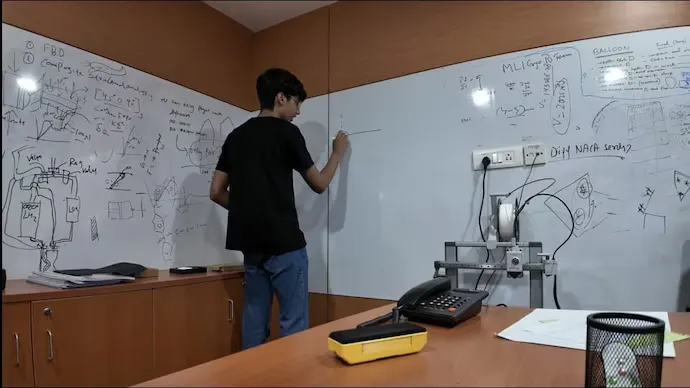
Most of the team members are in their early twenties, many from top technical institutes, working out of a small office but chasing a very big dream.
Instead of blasting off from the ground, the system uses a huge high-altitude balloon to lift the rocket into thinner air.
Once the rocket reaches high altitude:
Air resistance is much lower
Less fuel is wasted pushing through thick atmosphere
The rocket can carry more payload
Shyenus Jain explains it simply:
“Launching from the ground wastes a lot of energy just pushing through thick air. By starting higher up, we can save fuel and carry two to three times more payload.”
The team is developing:
High-pressure inflatable balloon systems
Hot-gas lift structures to handle heavier rockets
Advanced propulsion concepts for future missions
They are already running wind-tunnel tests and small-scale trials, and aim to fly their first prototype by the end of 2026.
Several patents have been filed in India and abroad.
Their long-term goal: reach orbit using this balloon-launch system.
Their work comes at a time when India’s space sector is changing rapidly.
Recent reforms — including:
IN-SPACe
Foreign investment approvals
New Space Policy 2023
have opened the door for private companies to build rockets, satellites and launch services.
Today:
Over 300 space startups operate in India
The sector is worth about $9 billion
The government wants it to reach $44 billion by 2033
Even India’s recent PSLV missions have carried satellites built by private firms, showing that space is no longer just a government domain.
If successful, balloon-launched rockets could:
Reduce launch costs
Increase payload capacity
Make space access more sustainable
Help small companies compete globally
From a modest office in Gurugram, these students may be working on a launch system that could one day change how humanity reaches space.

ପାରମ୍ପରିକ ରୀତିନୀତିରେ ଆରମ୍ଭ ହେବ ଯାତ୍ରା ପଟଖଣ୍ଡା ଯ...

ଆନ୍ଧ୍ରର ନିର୍ବାଚନ ଘୋଷଣା ପରେ ପୁଣି ଚର୍ଚ୍ଚାରେ କୋଟିଆ...

Green Card ଅପେକ୍ଷାରେ ଥିବା ବିଦେଶୀଙ୍କୁ Work Permit ଝ...

ମଙ୍ଗଳର ଚନ୍ଦ୍ର ଫୋବୋସ୍କୁ ଗଲା MMX ଜାପାନର H3 ରକେଟ୍...

ଭାରତକୁ ଭଲପାଇବା ନେଇ ଅହମଦ ତାହାଙ୍କ ପୋଷ୍ଟ ଭାରତର ପ୍ର...

ମୁମ୍ବାଇରେ ପହଞ୍ଚିଲେ ରୁବିଓ ଆମେରିକାର ବିଦେଶ ସଚିବ ମା...

ଶୁକ୍ର ବକ୍ରୀକୁ ନେଇ କ’ଣ କୁହୁଛି ଜ୍ୟୋତିଷ? ଜ୍ୟ...

ରିଲ୍ସରେ ବ୍ୟସ୍ତ ବାପା-ମା’, ଲହଡ଼ି ନିକଟରେ ଛୁଆ...